Rolling in It: How Turkish Food Trucks Took Over America's Streets — One Doner at a Time
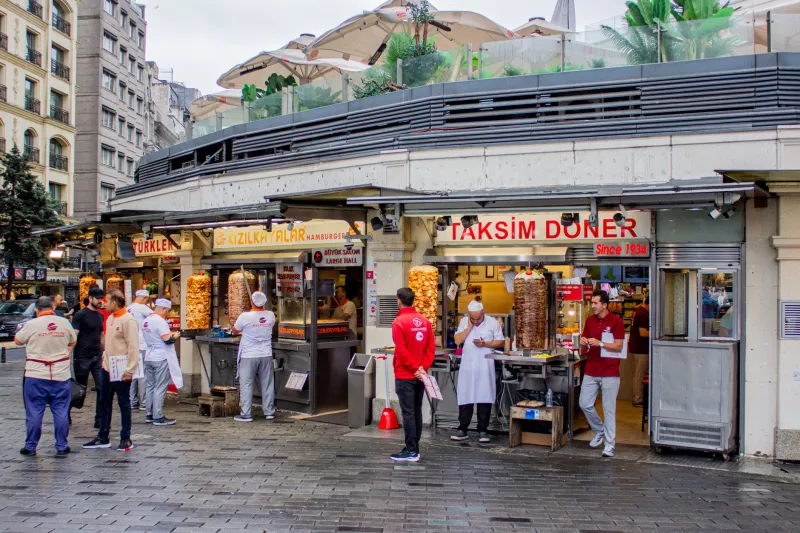
On a Tuesday afternoon in Austin, Texas, the line outside Mert's Doner stretches past the food truck and halfway down the block. It's 92 degrees. Nobody is leaving. A group of UT students at the back of the line are on their phones — not scrolling away from boredom, but tagging the truck's location to their friends.
This is not an unusual scene anymore.
The Numbers Behind the Momentum
The American food truck industry has grown into a multi-billion dollar sector, and within it, Turkish and Middle Eastern operators have quietly become some of the most consistent performers. According to IBISWorld data, the food truck industry has seen sustained annual growth, and niche ethnic cuisine trucks — particularly those with strong social media presences — are outperforming the sector average.
Turkish and Middle Eastern concepts have a specific structural advantage: the product. Doner, shawarma, falafel, börek, lahmacun — these are foods engineered, over centuries, for speed and portability. They're not adapted for street food. They are street food, in their original form.
"In Istanbul, you eat doner standing up, wrapped in paper, on your way somewhere," says Mert Aydın, the operator behind the Austin truck and two more that have since opened in Dallas. "The format was always right. We just had to bring it here and do it correctly."
Doing it correctly, it turns out, is the whole game.
Why Trucks Beat Tables Right Now
The restaurant industry has been having a rough few years. Labor costs are up. Rent in major cities is brutal. The post-pandemic dining landscape has shifted in ways that hurt mid-range sit-down establishments disproportionately.
Food trucks sidestep a significant portion of that math. Lower overhead. Flexible location. The ability to follow demand — festivals, lunch crowds, late-night spots — rather than waiting for demand to find you.
For Turkish and Middle Eastern operators specifically, the truck model has another advantage: it lowers the barrier to entry in a market that hasn't always been receptive to their cuisines at the full-service restaurant level.
"Opening a real restaurant here, with the right interior, the right menu, the right neighborhood — that takes hundreds of thousands of dollars and years of relationship-building," says Elif Kaya, who runs a Turkish street food truck in Chicago's Wicker Park neighborhood. "A truck, I could launch for a fraction of that. And I could test what people actually wanted before I committed to a space."
Elif has been operating for three years. She's now profitable enough that she's looking at her first brick-and-mortar location — using the truck as both proof of concept and a built-in customer base.
The Gen Z Factor
Ask any successful Turkish or Middle Eastern food truck operator who their core customer is, and the answer is almost always the same: young people. Specifically, the 18-to-30 demographic that food industry analysts have been trying to decode for years.
Gen Z eats differently than previous generations. They're more adventurous, more informed, and — critically — more skeptical of corporate food culture. The Chipotle assembly line, the McDonald's brand refresh, the fast-casual chains that try to feel local but don't — Gen Z sees through all of it.
What they respond to is story, craft, and authenticity. Turkish food trucks, operated by people who grew up eating this food, carry all three by default.
"I could tell the guy at Mert's truck actually cared about the meat," says Jordan, a 23-year-old graduate student in Austin. "He explained where it came from, how it was seasoned, why the bread mattered. No chain restaurant does that. Nobody behind a counter at a chain even knows."
Social media accelerates everything. A well-shot doner wrap — the cross-section reveal, the sauce drip, the fresh herb garnish — performs consistently well on TikTok and Instagram. Turkish food trucks have figured this out. Many operators actively encourage customers to film, create content around their prep process, and build personalities around their trucks rather than just menus.
The Craft Question
Not every Turkish food truck is operating at the same level, and the operators who are winning long-term are the ones who've refused to cut corners on the fundamentals.
The doner vertical spit is non-negotiable for the serious players. So is sourcing — lamb from trusted suppliers, bread that's either made in-house or sourced from Turkish bakeries, spice blends that aren't coming out of a generic commercial container.
"I've seen trucks open up and try to do 'Turkish-style' kebab with whatever's cheapest," says Mert. "They do okay for a while, then they disappear. The customers who know — and there are more of them every year — they know immediately when it's not right."
Elif agrees. "My biggest competition isn't other Turkish trucks. It's my own standards. If I drop the quality for one week because I'm tired or the supplier let me down and I didn't find an alternative, I feel it in the line the next week. People notice. They remember."
Beyond the Doner: The Menu Evolution
The most interesting trucks aren't just doing the greatest hits. They're using the format to introduce American audiences to a wider slice of Turkish and Middle Eastern street food culture.
Simit — the sesame-encrusted bread ring that's as ubiquitous in Istanbul as the bagel is in New York — is showing up on truck menus in new forms. Midye dolma (stuffed mussels) have made appearances at coastal city trucks. Lahmacun, often called Turkish pizza, is becoming a breakout item for operators willing to educate customers on what it is.
"Every time I add something new, there's a moment where I have to explain it," Elif says. "But once people try it, they come back asking for it specifically. That's how you build a menu. Slowly, with patience."
What the Future Looks Like on Wheels
The trajectory for Turkish and Middle Eastern food trucks in the US points in one direction: up. The operators who've done it right are expanding — more trucks, catering operations, ghost kitchen partnerships, and eventual brick-and-mortar concepts that carry the brand equity built on the street.
For diaspora communities, it's also something beyond business. It's visibility. It's the experience of watching Americans wait in line, in the heat, for food that their grandmothers made on weeknights without a second thought.
"My dad called me when he visited from Ankara," Mert says, grinning. "He watched the line for a while and then he said, 'So Americans like doner now.' I said, yeah, Baba. They really do."
They really do.