Soap, Steam, and Something Deeper: Why Americans Are Rethinking Wellness Through the Hammam
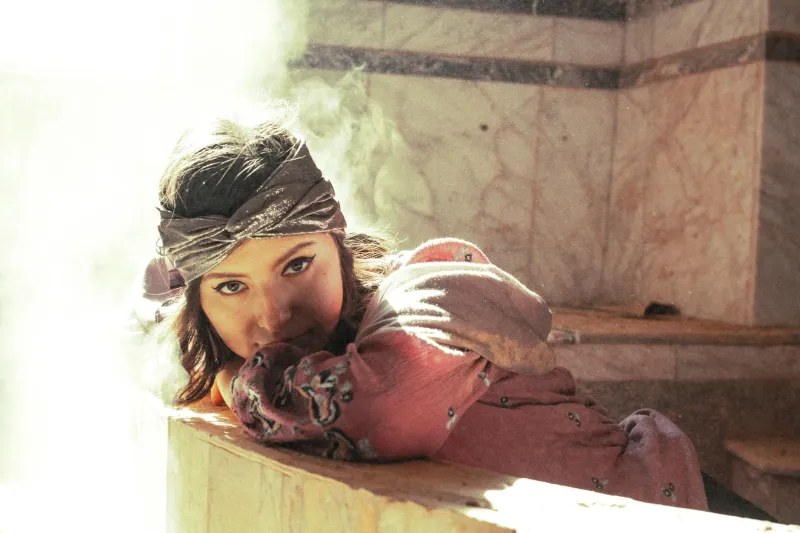
Walk into almost any upscale spa in a major American city these days and you'll notice something different. The cold plunge pools are still there. The eucalyptus steam rooms haven't gone anywhere. But tucked between the hydrotherapy jets and the infrared sauna pods, there's a new fixture making itself at home: the kese mitt, a coarse exfoliating glove that has been a staple of Turkish bath culture for centuries.
It's a small detail, but it signals something much bigger. The hammam — that ancient institution of communal bathing, ritual cleansing, and unhurried human connection — is quietly rewiring how Americans think about taking care of themselves.
More Than Just a Fancy Scrub
For anyone who grew up in Turkey, the Arab world, or across the broader MENA region, the hammam needs no introduction. You know what it means to show up with your pestemal (that thin, woven towel), to surrender yourself to the tellak's firm hands, to emerge with skin so clean it feels borrowed from someone younger. You know the part nobody talks about in wellness brochures: the conversation, the laughter, the strange intimacy of sitting in steam with strangers who somehow don't feel like strangers.
That social dimension is exactly what's been missing from American self-care culture — and increasingly, people are noticing the gap.
"We've spent years optimizing wellness into a solo performance," says Leyla Arslan, a Turkish-American wellness entrepreneur who opened her hammam-inspired bathhouse in Chicago's Wicker Park neighborhood two years ago. "You put on your headphones, you do your thing, you leave. But healing was never supposed to be a solo sport. The hammam understood that before anyone had a word for it."
Her space, which she deliberately designed to feel less like a spa and more like a neighborhood institution, has a waiting list that stretches three weeks out on weekends.
The Philosophy Behind the Steam
To understand why the hammam translates so well to American audiences right now, you have to understand what it was actually built on.
In Ottoman and broader Islamic tradition, ritual cleanliness — tahara — wasn't just physical hygiene. It was a form of spiritual preparation, a way of arriving present in your own body before arriving in the world. The hammam was where that transition happened. It was the threshold between the private self and the public one, maintained through heat, water, touch, and time.
That framework — wellness as transition rather than transaction — is exactly what a growing segment of American consumers say they're looking for. The data backs this up. According to the Global Wellness Institute, Americans spent over $480 billion on wellness in 2022, yet surveys consistently show that loneliness, burnout, and disconnection are at record highs. Spending more hasn't fixed the feeling. People are starting to ask why.
The hammam offers an answer that has nothing to do with a new supplement stack.
From Tradition to Trend — With Respect
Not everyone is thrilled about how the hammam is being absorbed into American wellness culture, and that tension is worth sitting with. There's a real difference between a luxury hotel offering a "hammam-inspired treatment" with Instagrammable copper bowls and a genuine effort to honor the tradition's roots.
Some Turkish and Arab American wellness practitioners have raised concerns about surface-level adoption — the aesthetic without the ethos. The heated marble slab, or göbek taşı, looks great in a Pinterest mood board. But the göbek taşı means something. It's where you lie under the dome and let the heat do its work, where you stop rushing, where the whole point is that nothing is happening except everything.
"I always tell my clients: the kese is not the hammam," says Fatima Nour, a Moroccan-American massage therapist in Los Angeles who trained in traditional hammam techniques in Marrakech before relocating to the US. "The hammam is the intention behind it. The slowness. The fact that you're not checking your phone. The fact that you're sharing space with other people and that's okay."
Fatima now runs workshops for other wellness practitioners in the LA area, teaching not just technique but context — because she believes you can't separate the practice from the culture that created it.
What the American Wellness Industry Is Actually Learning
To be fair, some American spa operators are doing the homework. A handful of bathhouses that have opened in New York, Los Angeles, and Miami in the past few years have gone beyond the aesthetic. They've hired practitioners with genuine training, sourced authentic Anatolian textiles, and structured their sessions around the actual rhythm of a traditional hammam visit — which doesn't rush you out in fifty minutes.
They've also quietly discovered something that traditional hammam culture has always known: people stay longer when they feel like they belong somewhere. Community is good for business, but it's also just good.
The American wellness industry's infatuation with individualized, optimized, trackable self-improvement has produced extraordinary innovation — and also a kind of exhaustion. Biohacking is impressive. Cold plunges are effective. But neither of them asks you to slow down, be present, and share that experience with another human being without documenting it.
The hammam asks all of those things. That might be exactly why it's resonating.
The Diaspora Connection
For Turkish and Arab Americans, this moment carries its own particular charge. Watching something your grandmother considered completely ordinary become the subject of breathless wellness coverage is a specific kind of surreal.
But many in the diaspora see it as an opening rather than an intrusion. When the broader American culture starts paying attention to something you've always known, there's an opportunity to tell the full story — not just the steam and the scrub, but the grandmother who took you on Friday mornings, the neighborhood hammam that served as a de facto community center, the way it felt to emerge into cold air afterward, clean in a way that had nothing to do with soap.
That story is bigger and richer than any spa treatment. And the best wellness entrepreneurs working in this space — many of them from the diaspora themselves — are making sure it gets told whole.
Coming Clean
The hammam isn't a trend. It's a few centuries old and it survived the fall of empires, the arrival of indoor plumbing, and the invention of the shower. It will outlast whatever wellness cycle we're currently in.
But right now, in this particular American moment — when people are exhausted, disconnected, and quietly suspicious that optimizing themselves harder isn't going to fix anything — the hammam has something genuinely useful to offer. Not just clean skin. A different idea of what taking care of yourself actually means.
Slow down. Get warm. Let someone help. Share the space.
It was never just a bath.