Skewered No More: How Turkish Kebab Culture Is Earning Its Spot at America's Serious Food Table
There's a moment happening right now in American food culture, and if you blink, you might miss it. It's not happening in a Michelin-starred dining room or on a celebrity chef's tasting menu. It's happening at a charcoal grill in Astoria, Queens, at a wood-fire pit in Houston's Midtown, and at a pop-up in Chicago's West Loop where the line wraps around the block before the doors even open. Turkish kebab — long dismissed as a quick, greasy lunch option — is having its ramen moment.
And it's about time.
From Cart to Craft: The Shift Nobody Saw Coming
Ask any food historian and they'll tell you that America's relationship with kebab has always been a little... casual. The rotating döner cone, the foil-wrapped wrap handed through a cart window at 2 a.m. — that was the dominant image. Functional. Affordable. Easy to ignore.
But something started shifting quietly over the past five or six years. Turkish-American chefs — many of them trained in both Anatolian culinary traditions and American fine dining kitchens — began asking a harder question: What if we actually took this seriously?
The answer has been nothing short of a culinary reckoning.
Chef-driven kebab restaurants are now opening with the same intentionality you'd expect from a serious sushi bar or a regional Italian trattoria. Sourcing matters. Technique matters. Regional identity — whether that's the smoky, cumin-forward Adana kebab from southern Turkey or the delicate, herb-stuffed varieties of Gaziantep — is being treated as a point of pride rather than a footnote.
"People used to come in and just say 'give me the chicken thing," says Murat Aksoy, who runs a kebab-forward restaurant in Brooklyn's Sunset Park neighborhood. "Now they're asking me what region the lamb is from, how long we marinate, whether the charcoal is oak or fruitwood. That's a completely different conversation."
Regional Specialization Is the New Flex
If you want to understand why this movement is gaining real traction, look at how Turkish chefs are leaning into regional specificity — the same way Japanese ramen shops distinguish themselves by broth style or the way American barbecue culture fiercely debates Texas brisket versus Carolina pulled pork.
Turkey's kebab traditions are extraordinarily diverse. The Adana kebab — named for the southern city on the Mediterranean coast — is made from hand-minced lamb fat and red pepper, pressed onto wide flat skewers and grilled over hot coals. It's smoky, spicy, and deeply savory in a way that has no real American equivalent. The Urfa kebab, from the city of Şanlıurfa near the Syrian border, is its earthier, darker cousin — less heat, more depth, often served with sour pomegranate molasses.
Then there's İskender kebab from Bursa, thinly sliced döner draped over torn flatbread and drenched in tomato sauce and browned butter — a dish so rich and specific it practically demands a sit-down meal. Or the köfte-adjacent Inegöl kebab, compact and herb-scented, shaped into cylinders and cooked until the outside crisps just enough to contrast with the juicy interior.
American diners, who have spent years developing sophisticated regional palates for things like hot chicken or regional pizza styles, are proving surprisingly receptive to this kind of specificity. Food-curious eaters want the story. They want to know where the dish is from, why it tastes the way it does, who made it this way first.
"I put a small map of Turkey on our menu," says Leyla Öztürk, who operates a kebab concept in Austin, Texas. "I mark the city each dish comes from. People stop and actually study it. They'll ask questions I never expected from a Tuesday lunch crowd."
The Competition Circuit Is Paying Attention
One of the clearest signs that a food tradition has arrived in the American culinary conversation is when it starts showing up in competition settings — and Turkish kebab is getting there.
Food festivals across the country, from New York City's Smorgasburg to the Houston Food Fest, have seen a noticeable uptick in Turkish vendors not just participating but winning. At several regional grilling competitions previously dominated by American barbecue, Turkish-style charcoal kebab entries have placed in top categories, earning the kind of peer recognition that changes how an entire culinary community looks at a tradition.
Food media is following. Serious Eats has published deep-dive guides on Adana kebab technique. The New York Times has profiled döner purists. Bon Appétit ran a feature on the regional kebab map of Anatolia that went genuinely viral among the food-obsessed corners of the internet. These aren't novelty pieces — they're the kind of earnest, respectful coverage that previously went to sushi masters and barbecue legends.
The Charcoal Question (Yes, It Matters)
One of the most fascinating — and very serious — debates happening inside this movement is about fire. Specifically, what you cook over and how.
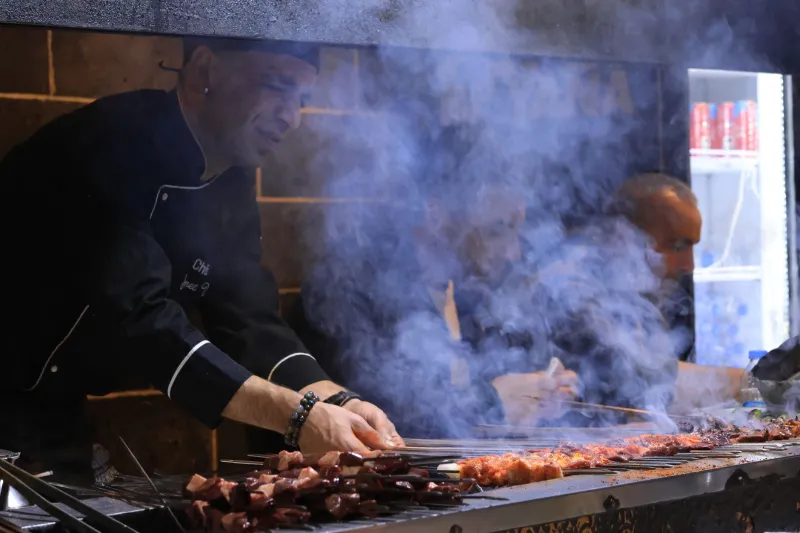
Authentic Turkish kebab culture has always been charcoal-driven. The fat from the meat drips onto the coals, creates aromatic smoke, rises back up and flavors the meat. It's a feedback loop that gas grills simply cannot replicate. But charcoal comes with complications in an American urban environment — ventilation requirements, fire codes, neighbor complaints.
The chefs who are most committed to the craft are finding ways around these obstacles. Some import specific wood charcoals from Turkish suppliers. Others have worked with city inspectors to get specialized ventilation systems approved. A few have built outdoor pop-up operations specifically to get around indoor restrictions.
"The smoke is not optional," says Aksoy, flatly. "If you're cooking kebab without real smoke, you're making something else. Something fine, maybe. But not kebab."
That kind of commitment — the refusal to cut corners even when corners would be easier — is exactly the attitude that turned American ramen from a dorm-room staple into a serious dining category.
What's Next for the Movement
The trajectory here feels familiar to anyone who watched sushi go from novelty to institution, or who saw Korean BBQ transform from a niche community experience into a mainstream American dining ritual. Turkish kebab culture is somewhere in the middle of that arc right now — past the novelty phase, not yet fully mainstream, but moving fast.
The chefs driving this moment are mostly first- and second-generation Turkish Americans who grew up eating this food at home and have spent their careers figuring out how to communicate its depth to a broader audience without flattening it into something easier to swallow. They're not fusion artists. They're not trying to make kebab more American. They're trying to make America more fluent in kebab.
And honestly? It's working.
Next time you see a kebab spot in your city, look a little closer. Check if they're specifying regions on the menu. Ask about the charcoal. See if there's a story behind the marinade. Because what looks like a lunch cart from the outside might just be the front line of one of the most interesting food movements happening in America right now.