Grounds for Growth: How Reading Turkish Coffee Cups Became the Ritual Gen Z Didn't Know It Needed
The Cup Doesn't Lie (Apparently)
Somewhere between your third therapy waitlist and your fourteenth self-help podcast, a new — or rather, very, very old — option has entered the chat. Turkish coffee reading, known in Turkish as kahve falı, is having a full-blown moment in the United States, and the people driving it aren't your grandmother's friends huddled around a kitchen table in Istanbul. They're twenty-two-year-olds in Portland, Chicago, and Brooklyn, flipping ceramic cups and filming the whole thing for their followers.
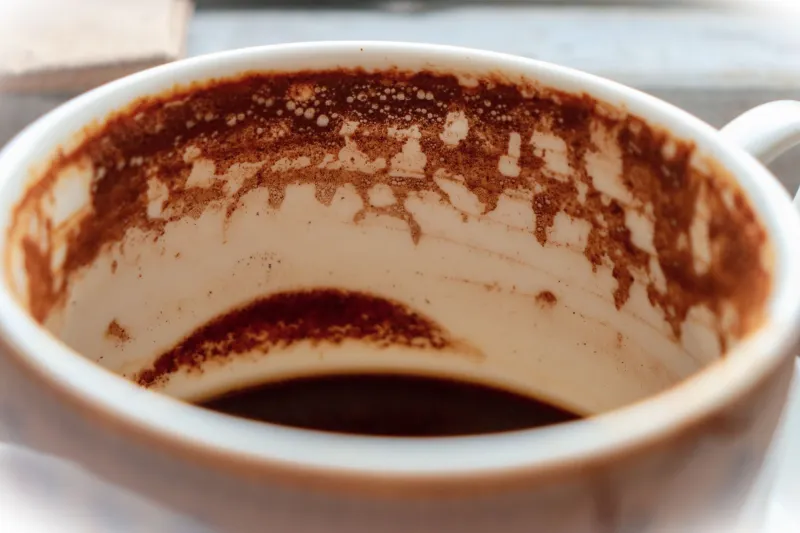
The practice itself is elegantly simple. You drink a small cup of unfiltered Turkish coffee — thick, rich, and slightly bitter — then flip the cup upside down onto its saucer, let the grounds cool and dry, and hand it to someone who can read the shapes left behind. The images that form — a bird, a staircase, a crescent, a dog — are interpreted as symbols of what's coming, what's lingering, and what you might need to face. It's part intuition, part storytelling, and entirely experiential.
And for a generation that's exhausted by screens, algorithms, and the relentless optimization of everyday life, that kind of slow, tactile ritual hits differently.
Why Now? Why This?
Gen Z didn't stumble into kahve falı by accident. The path here runs through a broader cultural shift toward what wellness researchers are calling "intentional mysticism" — the turn toward rituals, symbols, and practices that force you to slow down and sit with uncertainty. Tarot cards, astrology, sound baths, and now coffee grounds: what these things share isn't a belief system so much as a structure. They give people a reason to pause, reflect, and have a real conversation about what they're actually feeling.
"Therapy is great, but I'm on a three-month waitlist," says Danya, a 24-year-old graduate student in Austin who first tried Turkish coffee reading at a friend's apartment after seeing it on TikTok. "My friend's mom did my reading, and she didn't tell me anything I didn't already know — but somehow hearing it out loud, framed that way, made it real. I cried. It was weirdly healing."
That's not an unusual response. Practitioners and participants alike describe the experience less as fortune-telling and more as a kind of guided reflection. The reader offers interpretations; the person receiving them decides what resonates. It's collaborative, open-ended, and deeply personal — which is exactly the kind of interaction Gen Z tends to crave.
Diaspora as the Bridge
For Turkish and Middle Eastern communities across the US, kahve falı has never really gone away. It's the thing that happens after Sunday dinner, at a cousin's bridal shower, during a long visit with your aunt who somehow always knows too much. It's woven into the social fabric of the culture in a way that doesn't need a trend cycle to validate it.
But what's new is the crossover. Turkish-American women — many of them in their thirties and forties — are finding themselves suddenly in demand as readers, fielding requests from non-Turkish friends, coworkers, and strangers who found them through Instagram or a local event listing.
Nazlı, who runs a small online reading practice out of New Jersey alongside her day job, says her client base has shifted dramatically in the last two years. "I used to read for family and family friends. Now I get DMs from people in Ohio who've never even had Turkish coffee before," she says, laughing. "I send them a brand list and walk them through how to brew it. The cup is just the beginning — the conversation is the whole point."
That conversation is something Nazlı takes seriously. She's careful to frame her readings as reflective rather than predictive, and she's noticed that her younger American clients often use the session to talk through anxiety, relationship questions, or major life decisions. "It becomes a container," she says. "The cup gives us something to look at together, and then everything else comes out."
From Istanbul to TikTok
Search "Turkish coffee reading" on TikTok and you'll find millions of views across hundreds of videos — some featuring actual Turkish readers explaining symbolism, others showing first-timers reacting with wide eyes as someone describes a figure in their grounds that sounds uncomfortably accurate. The comment sections are full of people asking where to find a reader, what coffee brand to use, and whether you can learn to read your own cup.
(For the record: yes, you can, though most practitioners say reading for yourself is notoriously tricky, since your own hopes and fears tend to color what you see.)
The hashtag #kahvefali has racked up significant traction, and several Turkish-American creators have built dedicated followings around the practice, offering mini readings, explainer videos, and cultural context that goes beyond the mystical surface. That context matters. The best of these creators are careful to situate kahve falı within its actual cultural history — a tradition that's been part of Turkish social life for centuries, not a trend invented for the algorithm.
The Ritual Is the Point
What gets lost in the TikTok version, practitioners say, is the pace. A proper kahve falı session isn't a quick video. It involves making the coffee — which itself requires attention and care — drinking it slowly, waiting for the cup to cool, and then spending real time with a reader who knows what they're doing. The whole thing might take an hour. That's kind of the point.
"Americans are used to getting answers fast," says Leila, a Turkish-American community organizer in Brooklyn who hosts monthly kahve falı gatherings for a mixed group of women. "But this practice asks you to wait. To sit with not knowing. And I think people are hungry for that right now — they just don't always realize it until they're in the room."
Her gatherings have a waiting list. Attendees bring snacks, talk, and take turns with the cup. Some come back every month. A few have started learning to read themselves.
A Tradition That Travels
What makes kahve falı particularly well-suited to this cultural moment is that it doesn't ask you to convert to anything. You don't have to speak Turkish, know the history of the Ottoman Empire, or commit to a specific worldview. You just have to show up, drink the coffee, and be willing to look at what's in the cup — and maybe, in the process, at what's going on inside you.
For Turkish and Middle Eastern diaspora communities, watching their grandmothers' kitchen ritual become a wellness trend is a complicated experience. There's pride, a little bit of irony, and sometimes frustration when the cultural roots get flattened out. But there's also something genuinely moving about seeing a tradition travel — about younger generations, regardless of background, finding value in a practice that's been quietly holding space for people for centuries.
The grounds have always been there. We're just finally paying attention.