Hamam Tiles, Hand-Knotted Rugs, and Brass Everywhere: How Turkish Design Became America's Favorite Home Upgrade
Your Living Room Called. It Wants a Geometric Tile Backsplash.
Somewhere between a Pinterest board and a late-night scroll through an Etsy rabbit hole, a lot of Americans have arrived at the same conclusion: their homes need more texture, more history, more soul. And increasingly, that soul is coming with a distinctly Ottoman flavor.
Handwoven kilim rugs. Intricate blue-and-white Iznik tilework. Hammered brass trays repurposed as coffee tables. Lanterns with geometric cutouts casting star-shaped shadows across whitewashed walls. What was once the exclusive territory of well-traveled design nerds or Turkish-American households is now showing up in apartments from Austin to Portland — and it's not slowing down.
"I started getting serious inquiries about incorporating Turkish and Moroccan elements around 2021, but in the last year it's just exploded," says Leila Karahan, an interior designer based in Chicago who grew up between Istanbul and the U.S. Midwest. "People aren't just asking for 'a rug.' They're sending me photos of specific regional patterns, asking about the difference between a kilim and a flatweave, wanting to know the story behind what they're buying."
That hunger for story — for objects that carry meaning — is a big part of what's fueling the shift.
Why Now? The Maximalism Comeback and the Search for Meaning
For years, American interior design was dominated by the clean lines of Scandinavian minimalism. All white walls, bare surfaces, and that particular shade of gray that seemed to colonize every new apartment building in every major city. But Gen Z and millennials, many of whom grew up in those sterile spaces, have started pushing back hard.
Enter maximalism. Enter pattern. Enter the idea that a home should actually look like someone lives there.
Turkish and Middle Eastern design traditions fit this moment almost perfectly. They're built on layering — rugs on top of rugs, patterns mixing with patterns, warm metals alongside rich textiles. There's a generosity to the aesthetic, a sense that more is more, that beauty is something you live inside rather than something you keep at a careful distance.
Beyoncé's Renaissance tour visuals, a wave of Ottoman-era dramas gaining traction on streaming platforms, and a growing diaspora community sharing their everyday lives on social media have all pushed these visual languages into the American mainstream consciousness. When something shows up on your For You page enough times, it starts to feel like home — even if you've never set foot in Istanbul or Marrakech.
"There's also something about the craftsmanship," says Marcus Webb, a home decor content creator in Los Angeles whose apartment renovation went semi-viral after he featured a hand-knotted Turkish rug as the centerpiece of his living room redesign. "I grew up in a house full of IKEA furniture. Nothing in it had a story. When I found out my rug was made by a weaver in a small village in Anatolia and that the pattern actually has regional significance, that hit different. It's not just decoration. It's a connection to something real."
The Elements Everyone's Reaching For
So what exactly are people incorporating? A few key elements keep coming up:
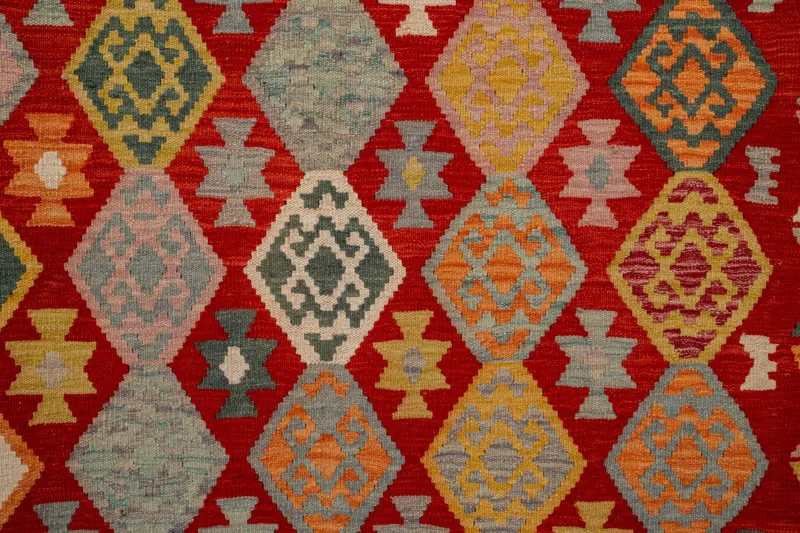
Kilim and flatweave rugs remain the gateway drug of Turkish design in America. Their bold geometric patterns work surprisingly well in both traditional and modern spaces, and the price range is wide enough that you can find something at a vintage market or go deep on a hand-knotted heirloom piece.
Iznik-inspired tilework — those deep blues, reds, and whites with floral and geometric motifs — is showing up as kitchen backsplashes, fireplace surrounds, and bathroom accent walls. American tile companies have been producing their own interpretations for years, but demand for authentic Turkish imports has grown noticeably.
Brass and copper fixtures tap into a broader trend toward warmer metals, but the hammered, artisanal quality of traditional Turkish copperwork gives them a distinctly handmade feel that mass-produced hardware simply can't replicate.
Textiles and cushion covers — particularly those made with traditional Ottoman embroidery techniques like oyabezi or kasnak işi — are finding their way onto sofas and window seats across the country.
Lanterns and pendant lighting with geometric latticework create the kind of atmospheric lighting that no number of smart bulbs can really imitate.
Doing It Right: Appreciation Without Appropriation
Here's where the conversation gets more nuanced — and where Leila Karahan gets most passionate.
"The difference between appreciation and appropriation in design comes down to knowledge and intention," she says. "Are you buying something because you understand what it is, where it comes from, who made it? Or are you just buying a 'vibe' without any curiosity about the culture behind it?"
Her practical advice: buy from makers and vendors who are transparent about origin and production. Support Turkish and Middle Eastern artisans directly — there are now dozens of small businesses run by diaspora entrepreneurs on platforms like Etsy, as well as direct-import shops in cities with large Turkish and Arab American communities. Ask questions. Read the descriptions. Learn even a little about what you're bringing into your home.
"A kilim isn't just a pretty rug," she adds. "Different regions have different patterns that carry different meanings. A rug from Konya looks nothing like one from Cappadocia. That specificity is part of what makes it valuable — don't flatten it into just 'Turkish' or worse, just 'ethnic.'"
Marcus Webb echoes this. "I spent weeks researching before I bought anything. I watched documentaries about rug weaving. I followed Turkish craftspeople on Instagram. By the time I made my purchase, I felt like I actually understood what I was getting. And honestly, that made me appreciate it so much more."
A Living Tradition, Not a Museum Piece
One thing that surprises a lot of Americans discovering Turkish design for the first time is how contemporary it already is. Istanbul's design scene is thriving, with young Turkish designers reinterpreting Ottoman visual traditions through a modern lens — pairing traditional motifs with minimalist forms, using ancestral craft techniques with unexpected materials.
Brands like Arzu Studio Hope, which works with Afghan and Central Asian weavers, and Turkish design houses that have started shipping directly to U.S. consumers are making it easier than ever to access the real thing. Meanwhile, American design studios are increasingly collaborating with artisan communities in Turkey and the broader Middle East, creating pieces that feel genuinely cross-cultural rather than simply imitative.
The Ottoman Empire isn't coming back, obviously. But the design traditions it helped shape — refined over centuries, carried forward by living craftspeople — are finding new homes in American living rooms, one hand-knotted rug at a time. And honestly? They look incredible.