The Turkish Breakfast Table Is an Event — And America Is Finally Getting an Invitation
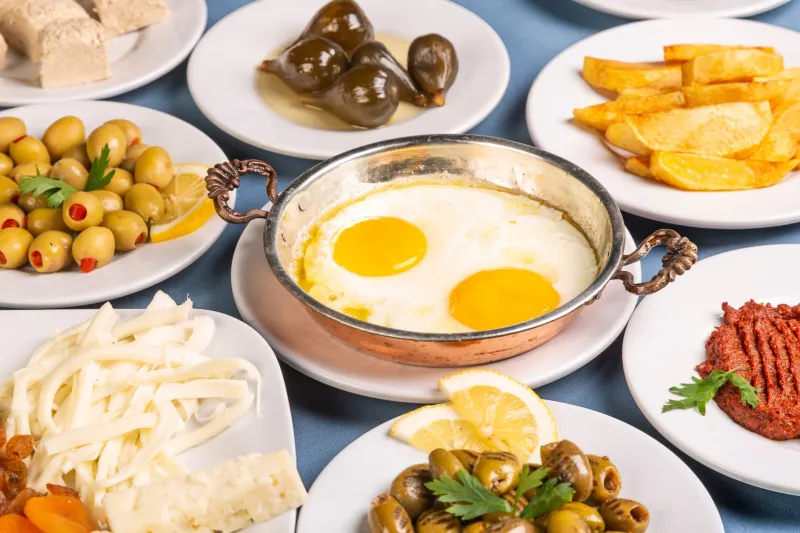
Let's get one thing straight: Turkish breakfast has nothing to do with grabbing something quick before work. It is not a protein bar situation. It is not even, really, a meal in the way Americans typically use that word. It is an occasion. A slow, generous, slightly chaotic spread of small plates that says, essentially, we have time for each other today, so let's use it well.
For Turkish and Turkish-American families, the weekend kahvaltı — the word itself comes from combining "kahve" (coffee) and "altı" (before), meaning what you eat before coffee — is a non-negotiable anchor of the week. It can last two, three, four hours. It involves more dishes than seem physically possible for the number of people at the table. And it is, without question, one of the great food experiences available to human beings.
America is starting to figure this out. Slowly, deliciously, and with a lot of questions about the correct way to eat simit.
What's Actually on the Table
Before we talk about the restaurants bringing this tradition to US cities, it's worth understanding what Turkish breakfast actually is — because it varies significantly by region, and that variation is a big part of what makes it interesting.
The Istanbul-style spread that most people encounter first tends to feature a rotating cast of small plates: fresh white cheeses (beyaz peynir), a sharper aged cheese, black and green olives marinated in herbs, sliced cucumbers and tomatoes, honey served still in the comb, thick clotted cream (kaymak) that you're supposed to layer with that honey on fresh bread, soft-boiled eggs or a skillet of menemen (eggs scrambled with tomatoes and peppers), and a basket of simit — those sesame-crusted ring breads that are basically Istanbul's answer to the bagel, though saying that out loud in front of a Turkish person is an experience.
But move east toward the Black Sea region, and the table shifts. Cornbread made from a specific local variety of corn appears. The anchovies (hamsi) that define Black Sea cooking show up even at breakfast. Muhlama — a molten, stretchy cheese fondue made with cornmeal — becomes the centerpiece, and it is aggressively good in a way that makes you understand why people in Trabzon eat it at 9 in the morning.
Go further east toward Van, near the Iranian border, and you encounter what many food writers have called the apex of the Turkish breakfast tradition: the Van kahvaltısı. This is a spread so elaborate and regionally specific that it has its own tourism industry. Van breakfast includes a specific herbed cheese called otlu peynir packed with wild herbs found only in that region, alongside a dozen or more other small dishes, all served with a particular amber-colored honey that Van beekeepers will tell you — correctly — is unlike any honey produced anywhere else.
And in southeastern Anatolia, in cities like Gaziantep and Şanlıurfa, breakfast skews spicier, with red pepper pastes, cured meats, and the influence of Arabic and Kurdish food traditions woven throughout.
The Entrepreneurs Bringing It Here
Merve Aksoy opened her breakfast café, Sofra Sabah, in a storefront in Astoria, Queens about two years ago. Astoria has long been home to one of New York City's largest Turkish-American communities, but Aksoy says even there, a dedicated breakfast spot felt like a gap in the neighborhood.
"We had kebab places, we had börek bakeries, we had restaurants doing full dinner menus," she explains, setting down a tray of tea glasses with that particular Turkish tulip shape. "But nobody was doing kahvaltı properly. Like, as a thing in itself, not just as something you ate before your actual day started."
Sofra Sabah's weekend reservations are now booked two to three weeks out. The clientele is a mix that Aksoy finds both gratifying and a little amusing: Turkish and Turkish-American families coming in for the experience of home, but also non-Turkish neighbors who discovered the place on Instagram and keep coming back.
"I had a table last Sunday," she says, "one grandmother who came from Samsun forty years ago and was getting emotional because the muhlama tasted right, and right next to her, four college kids from Fordham who had never heard of muhlama before and were losing their minds over it. That's the whole thing, right there."
In Chicago, a couple named Tarık and Selin Demirci opened Kahvaltı House in the Logan Square neighborhood after years of hosting elaborate Sunday breakfasts for friends that inevitably turned into events. "People kept saying we should open a restaurant, and we kept saying we didn't want to run a restaurant," Tarık says. "Then we realized that kahvaltı is basically what we'd be running — a few hours in the morning, maximum, and then we're done. That felt manageable."
Kahvaltı House is closed by 2pm every day. The Demircis rotate their menu seasonally and source as many ingredients as possible from Turkish and Middle Eastern importers, including the specific Van honey that Selin insists is non-negotiable.
In Los Angeles, the breakfast conversation is happening in different ways — a handful of Turkish-owned cafés in neighborhoods like Silver Lake and Culver City have added dedicated kahvaltı menus on weekends, and at least two new spots focused exclusively on the breakfast tradition are reportedly in the works.
What to Order When You Go
If you're approaching a Turkish breakfast café for the first time, a few things to know. First, don't order à la carte if the place offers a full spread option — you'll miss the point. The experience is the accumulation of small things, the way flavors move from savory to sweet to briny and back again.
Start with the cheese and olives while everything else arrives. Eat the kaymak and honey together on fresh bread before the kaymak has a chance to warm up too much. If menemen is on the menu, it's going to arrive in the pan it was cooked in — that's correct. If they have simit, use it to scoop rather than slice it like a bagel (seriously, don't slice it like a bagel). And the tea — çay, black and served in those tulip glasses — is not optional. It is the thread that runs through the whole meal.
Why This Matters Beyond the Food
There's something worth saying about what it means when a food tradition this specific, this regional, this rooted in a particular culture's relationship with time and hospitality, finds an audience in American cities.
For Turkish-American families, these breakfast spots are doing something that goes beyond serving good food. They're creating spaces where a cultural practice that can feel fragile in diaspora — something that happens in people's homes but rarely in public — gets to exist visibly, on its own terms, without being simplified for outside consumption.
And for American diners encountering it for the first time, a properly done Turkish breakfast is one of those rare experiences that actually changes how you think about what a meal can be. Not fuel, not convenience, not even just flavor — but a reason to sit down together and stay a while.
That's a pretty good thing to be exporting.