Sultans, Secrets, and Slow Burns: Why American Readers Can't Put Down Turkish Historical Romance
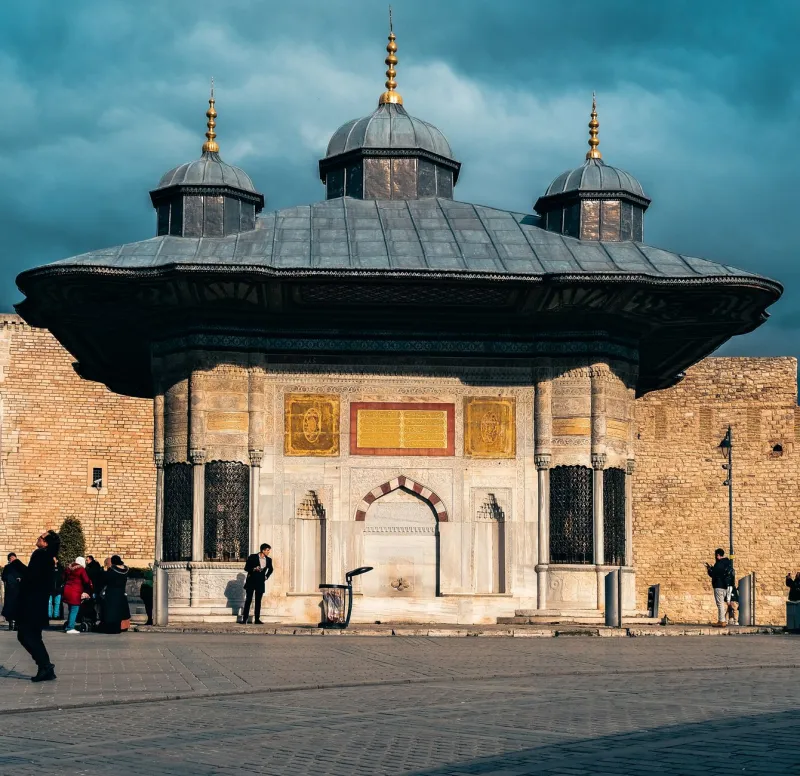
Walk into any Barnes & Noble in a major American city right now, and something interesting is happening in the fiction section. Between the usual Regency-era ballrooms and Scottish highland warriors, you'll spot covers featuring crescent moons, intricate tile patterns, and women in embroidered kaftans. Turkish and Middle Eastern historical romance has arrived — loudly, beautifully, and with absolutely no intention of leaving.
This isn't a quiet literary trend tucked into academic journals. It's a full-blown cultural moment playing out in real time on BookTok, Goodreads forums, and in the comment sections of author Instagram pages. And for Turkish-American readers especially, it feels like something long overdue.
The Numbers Don't Lie
Publishing insiders have been watching this shift build for a few years, but 2023 and 2024 really broke the dam open. Books set in the Ottoman Empire or drawing on Turkish and broader Middle Eastern cultural frameworks have been landing on bestseller lists with a regularity that would have seemed unlikely a decade ago. Several titles have crossed the 100,000-copy mark in US sales, a threshold that makes publishers sit up very straight.
Literary agent Nadia Korhut, who represents several authors writing in this space, told us the change in publisher appetite has been dramatic. "Three years ago, I'd pitch a manuscript set in 16th-century Istanbul and get polite passes about 'market uncertainty.' Now those same publishers are actively asking me if I have more of that on my list. The market has spoken."
What shifted? BookTok, mostly. TikTok's reading community has an almost supernatural ability to take a book that might have had modest initial sales and turn it into a phenomenon through sheer collective enthusiasm. When readers started making video reviews of Ottoman-set romances — lingering over the lush descriptions of hammams, palace intrigues, and slow-burn emotional tension — the algorithm did the rest.
What Makes These Stories Different
American romance fiction has long operated within certain conventions. There's the meet-cute, the misunderstanding, the grand gesture, the happily ever after. Those beats aren't going anywhere. But Turkish and Middle Eastern historical romance brings something to the table that a lot of readers, particularly younger ones, have been quietly hungry for: a fundamentally different architecture of love and family.
In many of these novels, love doesn't exist in isolation from community. The tension isn't just between two people — it's between individuals and the elaborate social and familial webs they're embedded in. Honor, loyalty, shame, duty — these aren't obstacles to romance, they're the texture of it. That complexity resonates.
Turkish-American author Elif Sarı, whose debut novel set in the late Ottoman period hit the USA Today bestseller list earlier this year, describes it this way: "Western romance often frames family and tradition as the thing the heroine has to escape to find love. In the stories I grew up with — and in the stories I write — family is the world the love story lives inside. That's not a limitation. That's the whole emotional landscape."
Readers in BookTok communities echo this sentiment constantly. One widely shared video from a reader in Chicago put it simply: "These books make me feel things Western romance just... doesn't. The restraint. The longing. The way a single glance across a courtyard carries the weight of an entire relationship."
The Diaspora Reader Experience
For Turkish-American and broader Middle Eastern diaspora readers, this moment carries extra weight. There's something quietly profound about opening a mainstream American bestseller and finding your grandmother's kitchen described with accuracy and tenderness, or recognizing the social dynamics of a family gathering you've lived through a hundred times.
"I've been reading romance since I was a teenager hiding books under my bed," says Deniz Yılmaz, a 34-year-old reader in New Jersey whose parents immigrated from Ankara in the 1990s. "But I never saw anything that looked like my family's world. Now I'm recommending these books to my mom. We're reading them together. That's wild to me."
This generational bridge effect is something several authors have noticed in their reader mail and event appearances. The books are pulling in not just young diaspora readers but also their parents, who perhaps never thought of themselves as romance novel people at all.
Publishers Are Finally Paying Attention
The industry's response has moved from cautious interest to genuine investment. Several major publishing houses have launched dedicated imprints or editorial initiatives focused on Middle Eastern and Mediterranean voices in commercial fiction. Advance offers for books in this space have climbed significantly. And translation deals are flowing in both directions — Turkish authors writing for international audiences, but also American authors who've built careers on Ottoman and Anatolian settings.
It's worth noting that not all of this has been without friction. Some critics within Turkish literary circles have raised questions about authenticity and the romanticization of complex historical periods, particularly anything touching on the later Ottoman era. It's a legitimate conversation, and the best authors working in this space tend to engage with it directly in their work and in interviews.
What to Read Right Now
If you want to understand what the fuss is about, Goodreads' dedicated "Ottoman Romance" shelf — which didn't exist three years ago and now has thousands of entries — is a good starting point. BookTok hashtags like #OttomanRomance and #TurkishHistoricalFiction are generating millions of views. Authors like Elif Sarı, along with a handful of others writing under pen names that deliberately obscure their backgrounds (a whole other conversation), are the names coming up again and again.
The trend also extends beyond romance strictly defined. Historical fiction, family sagas, and literary novels drawing on Turkish and Anatolian settings are finding American audiences in ways they simply weren't before. The success of romance — always the commercial engine of the book market — seems to be opening doors for the broader category.
The Bigger Picture
What's happening in American bookstores with Turkish and Middle Eastern romance isn't really about books, or at least not only about books. It's about whose stories get told, whose emotional worlds get treated as universal, and whose cultural landscapes get rendered as exotic backdrop versus lived-in home.
For a diaspora community that has often watched its culture appear in American media as either invisible or flattened into stereotype, seeing Istanbul's coffeehouses and Anatolian villages treated with the same loving detail as the English countryside or Regency London — that means something real.
The readers showing up for these books in huge numbers are saying, pretty clearly, that they were ready for this a long time ago. The publishing industry is just finally catching up.