Why Is Gen Z America Obsessed With Turkish TikTok Right Now?
Something strange and wonderful is happening on American TikTok, and if you're part of the Turkish or Middle Eastern diaspora, you've probably already noticed it. Sounds you grew up hearing at family gatherings are suddenly soundtracking videos made by teenagers in Ohio. Dances tied to Anatolian pop songs are being recreated in dorm rooms across the country. Beauty routines your aunties perfected decades ago are going viral under hashtags like #TurkishGirlSummer.
The algorithm, it seems, has discovered something the diaspora always knew: Turkish and Middle Eastern culture is genuinely, unambiguously cool.
But how did we get here? And what does it actually mean?
The Sound That Started It All
If there's a single moment that marks the inflection point, most observers point to the breakout spread of Dj Tolunay-style Turkish pop edits and the hypnotic, bass-heavy remixes of classic arabesk tracks that started circulating on American FYPs in late 2022 and exploded through 2023 and 2024.
Arabesk — a genre born from the collision of Anatolian folk music, Arabic influences, and Istanbul's urban melancholy — was never supposed to travel this far. It's music that carries a specific emotional weight, tied to migration, longing, and working-class Turkish identity. And yet, stripped of context and dropped over a trending audio clip, something in its texture connected.
"I didn't know what I was hearing but I needed more of it," wrote one American TikTok user under a video that accumulated 4.2 million views. The comments were full of people asking the same question: what IS this?
That curiosity is the engine. Turkish-American creators, many of whom had been posting for years to modest audiences, suddenly found themselves fielding hundreds of comments from non-diaspora viewers wanting to understand what they were experiencing.
Creators Who Became Bridges
The real architects of this moment aren't record labels or marketing campaigns. They're individual creators who happened to be in the right place, posting the right content, at the right algorithmic moment.
@aycainthewild, a Turkish-American lifestyle creator based in New York, saw her following jump from roughly 40,000 to over 600,000 in eight months. Her content — a casual mix of language explainers, Istanbul travel footage, Turkish breakfast prep videos, and commentary on the diaspora experience — resonated in ways she didn't fully anticipate.
"I made a video explaining what hüzün means — that specific Istanbul melancholy concept — and it went completely sideways viral," she told İst Dünya. "Americans were tagging their friends saying 'this is literally me.' The emotional vocabulary translated even when the language didn't."
Similarly, @bosphorusbeauty — a beauty creator of Turkish and Lebanese heritage based in Los Angeles — built a massive audience by centering Middle Eastern beauty practices: kohl eyeliner tutorials, hammam skincare routines, the art of the dramatic brow. Her videos regularly pull millions of views, and she's been featured in American Vogue's digital content.
"My mom's beauty routine is now a 'trend,'" she said in one viral video, with the kind of affectionate exasperation that resonated across the diaspora instantly.
The Dance Moment: Özgün's "Yak" and the Challenge That Crossed Over
No discussion of Turkish TikTok's American breakthrough is complete without addressing the dance challenge phenomenon. When a choreographed routine set to a remix of Turkish pop artist Özgün's catalog started spreading through American creator communities in 2023, it followed a now-familiar pattern: diaspora creators posted it, it caught algorithmic traction, non-diaspora creators recreated it, and suddenly the sound was everywhere.
What made this particular wave interesting was the comment section discourse it generated. Turkish and Middle Eastern users flooded the comments of American recreations — sometimes welcoming, sometimes protective, often both simultaneously. The conversation about who gets to participate in cultural moments, and what gets lost in translation when a trend travels, played out publicly and in real time.
"It's complicated," admits one Chicago-based Turkish-American college student who posts under the handle @halfturkhalfchaos. "Part of me loves that people are interested. Part of me wants them to know why this music sounds the way it does before they just dance to it."
That tension — between celebration and context — is one of the defining features of this cultural moment.
Beauty, Food, and the 'Aesthetic' Pipeline
Beyond music and dance, Turkish and Middle Eastern culture has been absorbed into the broader Gen Z aesthetic vocabulary in quieter but arguably more durable ways.
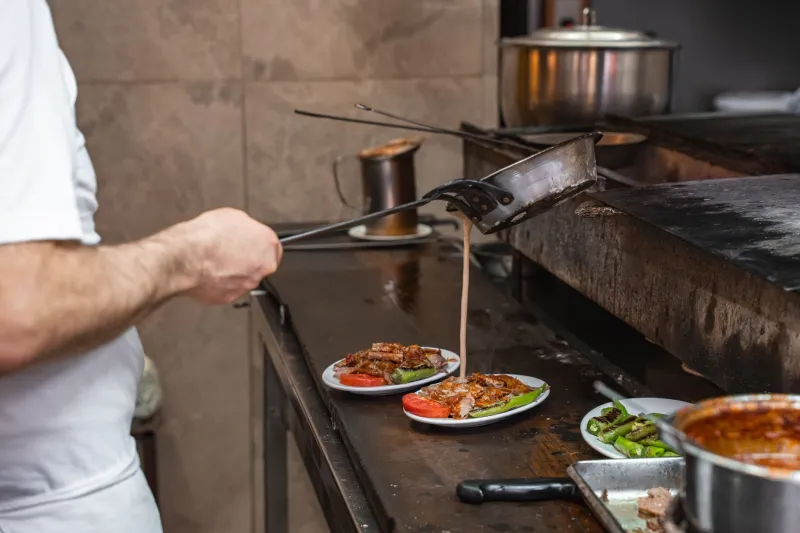
The "Turkish breakfast" content genre — elaborate spreads featuring simit, beyaz peynir, olives, eggs, honey, and jam arranged on large wooden boards — has become one of the most reliably viral food formats on the platform. What diaspora families ate every Sunday morning is now being recreated by food creators across the country, tagged under #TurkishBreakfast with videos collectively pulling hundreds of millions of views.
Similarly, Middle Eastern skincare — specifically the emphasis on olive oil, rose water, and multi-step cleansing rituals — has been absorbed into the broader "clean girl" and "that girl" aesthetics that have dominated Gen Z beauty content for the past two years. The practices aren't always correctly attributed, but the interest is genuine, and diaspora creators have been quick to step in with context and education.
What the Diaspora Makes of All This
For Turkish-Americans and Middle Eastern diaspora communities who have spent years navigating the gap between their home culture and their American reality, this moment carries a specific kind of emotional complexity.
There's pride, obviously. Seeing elements of your heritage go viral — watched, admired, and recreated by people who had no prior connection to it — is genuinely moving. There's also, for many, a sense of irony: the same culture that was sometimes treated as "too foreign" or "too other" in American social contexts is now being celebrated by the same demographic that might have once raised an eyebrow at a packed Turkish lunch box in a school cafeteria.
"I spent years code-switching," says one second-generation Turkish-American creator based in Austin. "Now the algorithm is doing the opposite of code-switching. It's amplifying. I'm still figuring out how to feel about it."
The Bigger Picture
What's happening on TikTok with Turkish and Middle Eastern content is part of a broader shift in how American Gen Z consumes and relates to global culture. The flattening of algorithmic distribution means that a sound, a dish, a beauty ritual, or a dance from Ankara or Beirut can reach a teenager in Atlanta before it reaches a mainstream media outlet. The diaspora, in this environment, isn't a niche audience — it's a launching pad.
And the content that travels farthest, creators and analysts both agree, tends to be the content made with the most genuine investment. Not the content designed to go viral. The content made because someone wanted to share something real.
That's always been the diaspora's superpower. Turns out, the algorithm finally figured it out too.