Passport to Purpose: Why Americans Are Trading Beach Vacations for Spiritual Journeys Through Turkey, Egypt, and Beyond
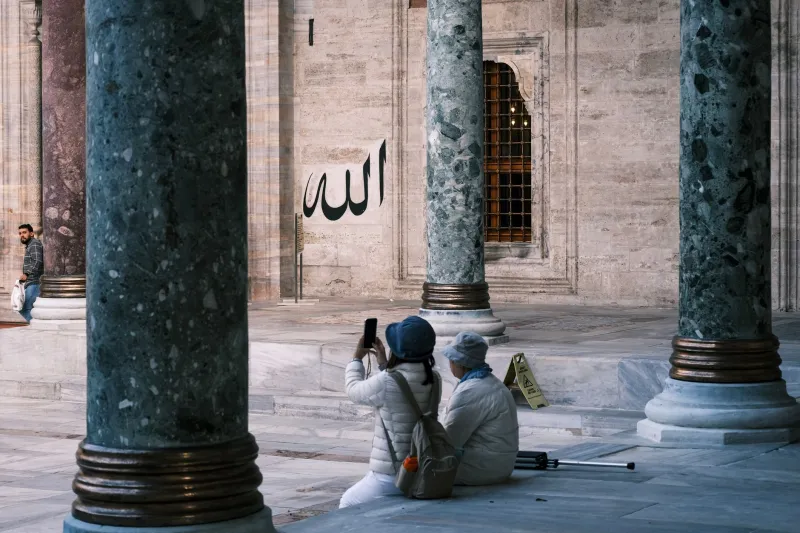
Samira Okafor was 28 years old the first time she stood inside the Blue Mosque in Istanbul. She had grown up in suburban Columbus, Ohio — the daughter of Egyptian immigrants who talked about Cairo the way people talk about a beloved relative they rarely get to visit. She knew the stories. She had eaten the food, heard the prayers through bedroom walls, absorbed the nostalgia. But nothing prepared her for what happened when she actually got there.
"I just started crying," she says. "Not sad crying. More like something unlocking. Like a part of me that had been speaking a foreign language my whole life finally found its native tongue."
Samira isn't alone. Across the United States, a growing number of Americans — second-generation diaspora, converts to Islam, and even spiritually curious travelers with no ancestral connection to the region — are making their way to Turkey, Egypt, Jordan, and Saudi Arabia. Not for Instagram content (though that happens too). But for something harder to name and harder to forget.
More Than Just Tourism
Travel agencies specializing in Middle Eastern and Turkish routes are reporting a noticeable shift in who's booking and why. Hana Yilmaz, co-founder of Bosphorus Journeys, a boutique travel company based in Chicago that designs custom itineraries through Turkey and the Arab world, says her client base has changed dramatically over the past five years.
"Five years ago, most of our clients were retirees, heritage travelers in their 50s and 60s," she explains. "Now we're getting 25-year-olds, 30-year-olds. They're not just checking off landmarks. They want to sit in a tekke, visit a Sufi lodge, walk through a bazaar without a tour guide telling them what to feel. They want to experience the place, not consume it."
The journeys themselves vary widely. Some are explicitly religious — Hajj and Umrah pilgrimages to Mecca and Medina, organized through mosques and Islamic travel organizations across the US. Others are more loosely spiritual: tracing Ottoman history through Istanbul's back streets, sitting with a sheikh in Cairo's Al-Azhar district, or watching the sun rise over Petra in Jordan. What connects them is intention. These travelers are going somewhere to find something.
The Diaspora Hunger
For second-generation Americans, the pull is often tied to a specific kind of grief — the mourning of a culture that arrived in America slightly diluted. You grew up with the food and the language and the music, but always at a remove. The homeland existed in your parents' memories, in old photographs, in the way your grandmother's voice changed when she talked about home.
Dr. Leila Farouq, a cultural anthropologist at the University of Michigan who studies diaspora identity and travel, calls this "roots tourism with emotional stakes."
"What we're seeing is a generation that grew up hyphenated — Turkish-American, Arab-American, Muslim-American — and they're using travel as a way to resolve that hyphen," she says. "They're not necessarily looking to move back or even to belong fully. They're looking for a felt sense of continuity. A way to say: this is also mine."
That emotional reckoning can be complicated. Some travelers return feeling more American than ever, newly appreciating the freedoms they navigate daily. Others come back questioning things — their careers, their relationships, their assumptions about success. Almost all of them say the trip changed something.
Converts Finding Their Coordinates
For American converts to Islam, the journey carries a different charge. Many describe feeling like perpetual outsiders in both worlds — not quite American enough in Muslim spaces, not quite Muslim enough in American ones. A pilgrimage, especially Hajj or Umrah, can serve as a kind of spiritual citizenship ceremony.
Marcus Webb, a 34-year-old from Atlanta who converted at 26, completed Umrah two years ago through a Georgia-based Islamic travel group. He describes the experience with the careful language of someone who knows it sounds big and doesn't want to undersell it.
"Standing in Masjid al-Haram, surrounded by two million people who looked nothing alike but were all doing the same thing, saying the same words — I felt legible for the first time," he says. "Like I finally made sense to myself."
Travel organizers who specialize in these routes say they put significant effort into preparing American converts for the cultural dimensions of the journey, not just the religious rituals. Language, customs, dress, the rhythms of daily life in Saudi Arabia or Turkey — all of it gets addressed, because the trip is as much about cultural immersion as spiritual practice.
Istanbul as a First Step
For many American travelers, Istanbul functions as a kind of gateway — a city that's simultaneously familiar enough to navigate comfortably and foreign enough to feel genuinely transformative. It has the coffee shops and the rooftop bars, yes, but it also has the call to prayer echoing across the Bosphorus at dawn, the weight of Byzantine and Ottoman history in every cobblestone, the particular warmth of a culture that treats hospitality as sacred.
Hana Yilmaz says Istanbul is consistently the top requested destination for first-time travelers through her agency. "It's the entry point. People go to Istanbul and then they want more. Then they want Cairo, Amman, Cappadocia. The appetite grows."
Social media plays a role, of course. TikTok and Instagram are full of American travelers documenting their first time in Turkey or Jordan with a kind of reverence that stands out from typical travel content. Less "here's a cool restaurant," more "I don't have the words for what just happened to me." That emotional authenticity resonates, and it's sending more people to book flights.
Coming Home Different
What happens when these travelers return to their American lives is perhaps the most interesting part of the story. Dr. Farouq notes that many report a lasting shift in how they relate to their communities — both their American social circles and their ethnic or religious ones.
"There's often a new confidence," she says. "A sense of having done something real, having gone somewhere that mattered. And with that comes a kind of groundedness. They stop performing their identity and start inhabiting it."
Samira, back in Columbus now, says she thinks about her trip to Istanbul and Egypt every day. She started an Arabic class. She's cooking more of her mother's recipes. She's planning to go back next year, this time to spend time in Alexandria, where her grandmother grew up.
"I used to feel like I was always translating myself," she says. "For my American friends, for my Egyptian relatives, for everyone. Now I feel less like a translation and more like an original. That trip did that."
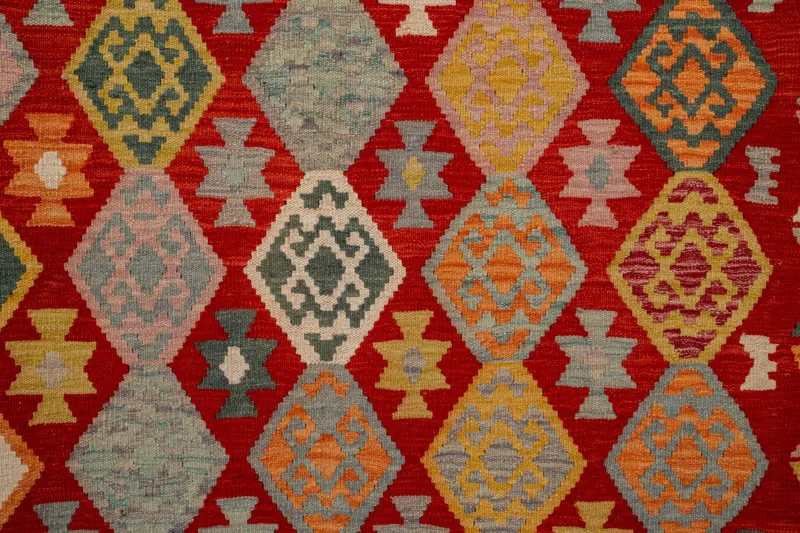
Maybe that's the real souvenir these journeys offer — not a rug or a spice blend or a string of evil eye beads, but a clearer, less apologetic version of yourself. And for a generation of Americans still figuring out where they fit in the world, that's worth every mile.