Stillness Is the New Stretch: How Sufi Zikr Circles Are Quietly Outpacing Yoga Studios in the American Wellness Scene
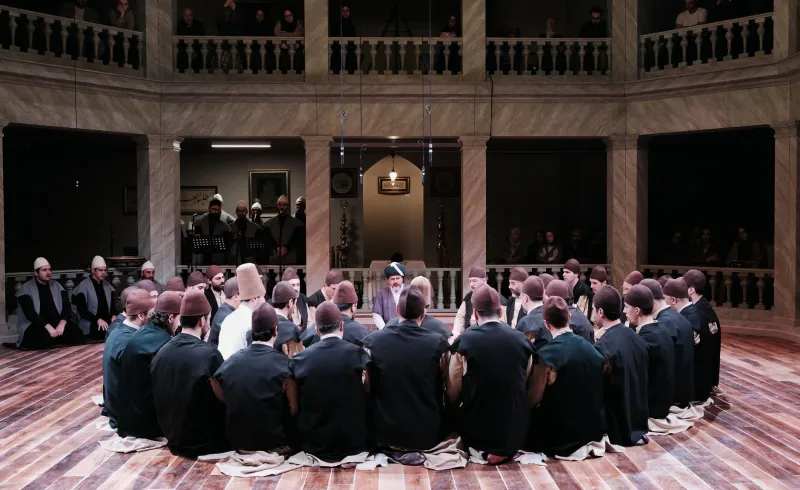
There's a moment in a zikr circle — usually somewhere between the third repetition and the twentieth — when the room stops feeling like a room. The breath slows. The chanting, low and rhythmic, starts to feel less like something you're doing and more like something that's happening through you. And for a lot of Americans who've spent years chasing that feeling through Peloton rides, breathwork retreats, and $40 sound bath sessions, it turns out this is the thing they were actually looking for.
Sufi meditation, and specifically the practice of zikr (also spelled dhikr — the Arabic-rooted word for "remembrance"), has been a cornerstone of Turkish and broader Islamic spiritual life for centuries. Rooted in the mystical tradition that produced Rumi, the whirling dervishes of Konya, and some of the most quietly radical spiritual poetry the world has ever seen, Sufi contemplative practice is now making serious inroads into mainstream American wellness culture. And it's doing it mostly by word of mouth, which is honestly the most Sufi way to spread anything.
What Even Is Zikr?
For the uninitiated: zikr is a form of devotional meditation practiced in Sufi orders, or tarikat, in which participants repeat sacred phrases — most commonly la ilaha illallah ("there is no god but God") — in a rhythmic, often communal setting. The practice can be silent or vocal, seated or moving, accompanied by music or held in pure stillness. The goal isn't relaxation, exactly, though that tends to happen. It's more about dissolving the ego's noise long enough to touch something underneath it.
In Turkey, zikr circles have been practiced in tekke (Sufi lodges) for over 700 years. The Ottoman Empire, for all its complicated legacies, was deeply shaped by Sufi spirituality — and that influence never fully disappeared, even after Atatürk officially banned Sufi orders in 1925. Today, Turkish Sufi communities operate openly again, and their teachers have increasingly found their way to the United States, drawn partly by diaspora communities and partly by an American spiritual hunger that feels, to many of them, genuinely urgent.
The Wellness Crowd Is Tired — And Looking for Something Real
Here's the thing about the American wellness industry: it's enormous, it's lucrative, and for a lot of the people inside it, it's stopped working. Not physically — plenty of people are fitter than ever. But spiritually? Emotionally? There's a widespread sense that something's missing from a wellness practice that's optimized for aesthetics and performance metrics.
"I did yoga for eight years," says Dani, a 31-year-old graphic designer from Portland who started attending a Sufi circle in her city two years ago. "I loved it. But I started to notice that I was performing mindfulness rather than actually experiencing it. I was thinking about my form, my breath count, whether I looked peaceful. There was no space for anything that wasn't about me."
She found the zikr circle through a Turkish-American friend who'd grown up attending gatherings with her family. "The first time I went, I didn't know what to expect. But within twenty minutes I was crying, and I genuinely don't know why. It wasn't sad. It was more like something I'd been holding for a long time just... let go."
That experience — unexpected emotional release, a sense of being held by something larger than individual effort — comes up again and again in conversations with Americans who've found their way into Sufi practice.
Turkish Teachers, American Rooms
Several Turkish Sufi sheikhs and teachers have established communities in US cities over the past two decades, particularly in New York, Los Angeles, Chicago, and the Bay Area. Their approach to welcoming non-Muslim seekers varies — some circles are explicitly open to all, emphasizing the universal dimensions of Sufi thought; others maintain a more traditional framework and ask that participants approach with genuine spiritual intent rather than casual curiosity.
Sheikh Mehmet, who leads a small but devoted community in New Jersey and asked that his full name not be used, has watched the demographic of his gatherings shift noticeably over the past five years. "Ten years ago, almost everyone in the room was from Turkey or the broader Muslim world. Now, maybe a third of the people who come regularly are American-born, non-Muslim. Some are Jewish, some are Christian, some have no religious background at all. They come because they're looking for something they can't name yet."
He's thoughtful about what he offers and what he doesn't. "Sufism is not a wellness product. It is a path. But the door is wide, and we don't turn people away who knock with sincerity."
Gen Z Is Here for the Mysticism (Just Not the Brand Deals)
What's particularly striking is how younger Americans — the generation that grew up being sold spirituality through influencer aesthetics and subscription apps — are responding to the deliberately unpolished, unteachable quality of Sufi practice.
Marcus, 26, a graduate student in Boston, started exploring Sufism after going deep on Rumi in a world literature class. "Everyone knows Rumi, right? But most people in America know him through those decontextualized Instagram quotes. When I started reading him in context — understanding that he was writing from inside a specific tradition, with a specific teacher, within a specific community — I wanted to know what that actually felt like from the inside."
He's been attending a local zikr circle for about a year. "It's the least Instagrammable thing I do. There's nothing to photograph, nothing to perform. You just sit there and try to be present. And somehow that's harder and more satisfying than anything else I've tried."
That resistance to documentation is, paradoxically, part of the appeal. In a wellness landscape where every practice gets optimized into content, Sufi zikr remains stubbornly interior.
What Turkish and Arab-American Communities Think About All This
Opinions within Muslim communities on the growing American interest in Sufi practice are genuinely mixed. Some Turkish-American families feel a quiet pride that a tradition so central to their cultural and spiritual heritage is being recognized on its own terms. Others are more cautious, wary of spiritual appropriation or the dilution of practices that carry deep theological weight.
"I grew up going to zikr with my grandparents in Bursa," says Elif, 38, who now lives in Chicago. "When I see Americans discovering it, my first feeling is honestly warmth. But I also hope they understand that this isn't just a technique. It's an entire worldview. It's love, it's surrender, it's relationship. You can't just extract the breathing exercise."
It's a fair point — and one that the most thoughtful American practitioners seem to genuinely grapple with.
The Bigger Picture
What the Sufi moment in American wellness really reflects is something deeper than a trend. It's a search for spiritual practices that don't require you to perform your own transformation — that hold space for difficulty, for mystery, for the parts of human experience that can't be optimized or posted.
Turkish Sufi tradition, with its centuries of accumulated wisdom about how to sit with the ineffable, turns out to have a lot to offer a culture that's exhausted from trying to fix itself. The zikr circle doesn't promise results. It just asks you to show up, breathe, and remember.
For a lot of Americans right now, that's exactly enough.