Five Hundred Guests, Three Days, One Dance Floor: The Beautiful Chaos of the Diaspora Mega-Wedding
The first thing you learn at a Turkish or Arab-American wedding is that you were wrong about when it starts. The invitation says 7 p.m. The zaffa — that thunderous procession of drummers and dancers leading the groom's party — doesn't hit its stride until 9:30. By midnight, when the buffet line finally thins and the grandmother of the bride has judged every dress in the room, the party is just getting started. And this is only day two of three.
Welcome to the mega-wedding, diaspora edition — where love meets logistics, and the guest list alone requires a spreadsheet with tabs.
It's Not a Party, It's a Production
Consider the math. A typical American wedding runs 100 to 150 guests. A typical Turkish-American or Arab-American wedding? "Two hundred is what we call intimate," laughs Rania Saleh, an event planner in Dearborn who stages roughly 30 large weddings a year. "I've done 800. The banquet hall doesn't matter — we'll take two halls and a tent."
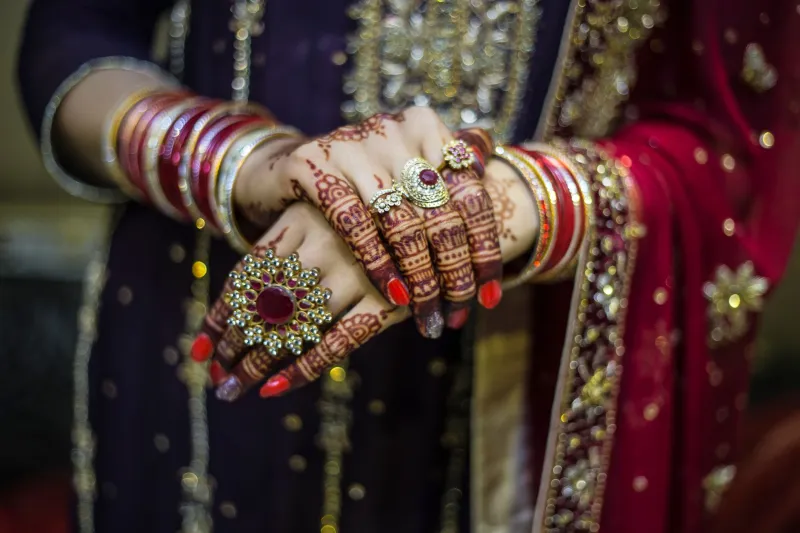
The multi-day structure isn't extravagance for its own sake; it's how the culture distributes the emotional load. There's the kına gecesi, the henna night, where the bride's female relatives and friends gather for an evening of singing, crying, and ceremonial henna — part bachelorette party, part ritual, part group therapy session set to folk songs that make grandmothers weep on cue. Then the main reception. Often a separate celebration hosted by the groom's family, or a farewell brunch that keeps the weekend going.
Palestinian and Levantine families add the zaffa, the musical procession that turns the groom's arrival into a marching-band event. Turkish celebrations might feature a davul-zurna entrance, the bride's father tying a red ribbon around her waist, and gold coins pinned to the couple's attire by every uncle with opinions and depth.
"Americans think of the wedding as one day," says Saleh. "We think of it as a season. The wedding isn't an event you attend. It's a story the whole community tells about itself."
Second Generation, New Rulebook
Here's where it gets interesting: the couples getting married now are mostly American-raised, and they're renegotiating everything — without amputating the traditions.
Take Zeynep and Marcus, a Chicago couple who married last fall. She wanted the kına gecesi; he'd never heard of one. They ended up hosting it in a Logan Square event space with a DJ who mixed Turkish folk classics with R&B, and his college friends learned the halay line dance off a YouTube tutorial that week. "By the end, his groomsman from Ohio was leading the circle," Zeynep says. "My grandmother decided he was her favorite. It's over for everyone else."
The compromises go both ways. Some couples trim the guest list — a genuinely radical act that requires diplomatic skills worthy of the UN. Others keep the 400 guests but swap the seated seven-course banquet for stations and food trucks. A growing number hire two photographers: one for the posed portraits, one for the chaos.
"The second-gen couples aren't less traditional," says Saleh. "They're bilingual. They know which traditions carry the meaning and which are just... heavy lifting. So they keep the henna night and drop the seven-tier cake. Smart trade."
What the Wedding Industry Is Quietly Stealing
Mainstream American weddings, meanwhile, are taking notes. The henna party has gone semi-mainstream, popping up in bridal magazines as a "pre-wedding celebration trend." Grand entrances with percussion — the zaffa spirit — are showing up in wedding TikToks with zero cultural attribution. Lounge setups, mezzes, late-night food service, and the general philosophy that a wedding should be a feast rather than a schedule have all drifted from diaspora ballrooms into the Pinterest mainstream.
Event planners notice. "Five years ago, clients asked for a rustic barn," one New Jersey planner told me. "Now they send me photos of a Turkish wedding with a live oud player and a dessert table with 40 kinds of baklava and say, 'like this, but make it mine.'"
The Point of It All
Strip away the logistics — the tent vendor, the seating chart wars, the aunties who need to be seated away from other aunties — and the mega-wedding is doing something American culture claims to want: it binds two families, not just two people. It insists that a marriage is a community project. It assumes you should be fed, danced at, and publicly celebrated for three days, not four hours.
Is it logistically insane? Absolutely. Is it expensive? Deeply. Will anyone at that wedding remember the chair covers? Not one person.
They'll remember the drummers. The henna. The moment the dance floor filled with three generations doing a line dance nobody taught them, moving in the same direction, at the same time, on purpose. In a lonely age, that's not extravagance. That's infrastructure.