Dice, Tea, and Zero Screens: The Turkish Game Café Is America's New Favorite Hangout
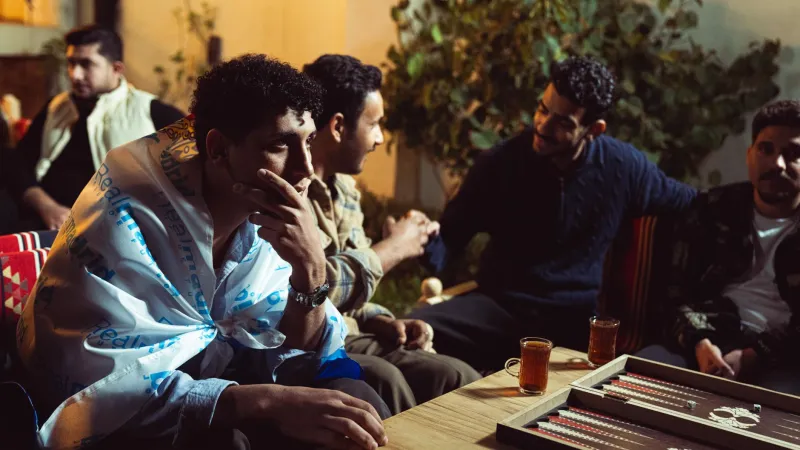
There's a moment that happens at Istanbul social clubs and their American cousins alike: someone shakes the dice cup, the plastic clicks like a maraca, and the whole table leans in. Nobody's phone is out. In 2025, that alone qualifies as a minor miracle.
Walk into Mavi Salon, a tea house and game café that opened last year in Chicago's Lakeview neighborhood, and you'll see something strange for a Friday night: a packed room making almost no noise. Twenty-somethings hunched over backgammon boards. A group of four playing okey with racks of numbered tiles. Çay — tulip-shaped glasses of amber Turkish tea — arriving on brass trays without anyone having to flag down a server.
"People come in and say, 'What is this, a movie set?'" says owner Emre Karahan, 41, who moved from Izmir fourteen years ago. "I tell them no, this is just Tuesday where I grew up."
The Third Space America Forgot
Sociologists have a term for the places that aren't home and aren't work: third spaces. Ray Oldenburg coined it in the '80s, and everyone from Starbucks to pickleball leagues has claimed to be reviving them. But most American "third spaces" still come with a tab, a time limit, or a screen in your face.
The Turkish kıraathane — loosely, a reading room or coffeehouse — was doing third spaces before the term existed. For over a century, these tea houses have been neighborhood living rooms: men (and increasingly everyone) playing tavla, sipping tea, arguing about football, staying for hours on the price of a single glass.
Now that model is being exported, and it's landing with a generation that's lonelier than any before it.
Dearborn, Detroit, and the Dice Circuit
Dearborn, Michigan — home to one of the largest Arab American communities in the country — has long had its own version: shisha cafés and social clubs where a board of tawle (the Levantine cousin of backgammon) is never far from reach. What's new is who's showing up.
"Five years ago, my customers were my uncle's friends," says Layla Haddad, whose family runs a café on Warren Avenue. "Now I see college students, tech workers, people who found us on TikTok. Someone posted a video of a dice roll with the caption 'this is better than therapy' and we got 2 million views. I had to buy 40 more boards."
There's even a competitive scene brewing. The American Tavla League, founded in 2022 by a group of Turkish and Iranian players in New York, now runs monthly tournaments in Brooklyn with 60-plus entrants — a mix of heritage players and curious newcomers who learned the game from a YouTube tutorial.
"Backgammon is the great equalizer," says league co-founder Deniz Aydın. "You can teach someone the rules in five minutes. Getting good takes years. And unlike poker, you can trash-talk the whole time. It's a conversation game."
Why Slow Play Is the New Content
The irony isn't lost on anyone: a trend built on putting the phone down is spreading largely through phones. Short-form videos of dice shakes, tea pouring, and dramatic okey reveals have racked up hundreds of millions of views under hashtags like #tavla and #backgammoncheck. There's something inherently cinematic about it — the clack of tiles, the theatrical flip of a doubling cube, the groan when your opponent rolls double sixes at the worst possible moment.
But the regulars will tell you the algorithm is just the doorway.
"I came for the aesthetic, honestly," admits Maya, a 24-year-old grad student who's been a Mavi Salon regular since March. "The tea glasses, the tiles, the whole vibe. I stayed because I made actual friends here. We have a group chat now. We have inside jokes. When's the last time a bar gave you that?"
The Economics of Sticking Around
For owners, the model works precisely because it's unhurried. A customer who camps out for four hours over two glasses of tea and a board rental might not spend like a bar customer — but they come back three times a week, bring friends, and post about it for free.
Karahan keeps his tea cheap on purpose. "In Turkey, the tea house is the neighbor's living room. If I charge $8 for çay, I've broken the whole idea." Instead, he makes money on food — börek, tost, menemen on weekends — and on retail: the café sells boards, tiles, and tea glasses to the growing stream of customers who want to recreate the ritual at home.
Not a Trend, a Homecoming
Ask the heritage players, though, and they'll gently push back on calling this a trend. For Turkish, Arab, Greek, Armenian, and Iranian communities, the game café never left — America just finally noticed.
"My grandfather played tavla every day of his life," says Aydın. "He'd think it's hilarious that young Americans are calling it 'mindfulness.' But hey — if the doubling cube brings people to the table, I'll take it. The tea is hot, the dice are rolling, and nobody's checking their phone. That's the whole business plan."
As the night winds down at Mavi Salon, a rematch is demanded, granted, and lost. The losing player orders one more tea. Nobody reaches for a coat. In a country that seems to have forgotten how to linger, the oldest solution in the book is a board, a cup, and someone worth beating twice.