Move Over, Influencers: Why Gen Z Is Taking Life Advice From Turkish and Arab Grandmothers Instead
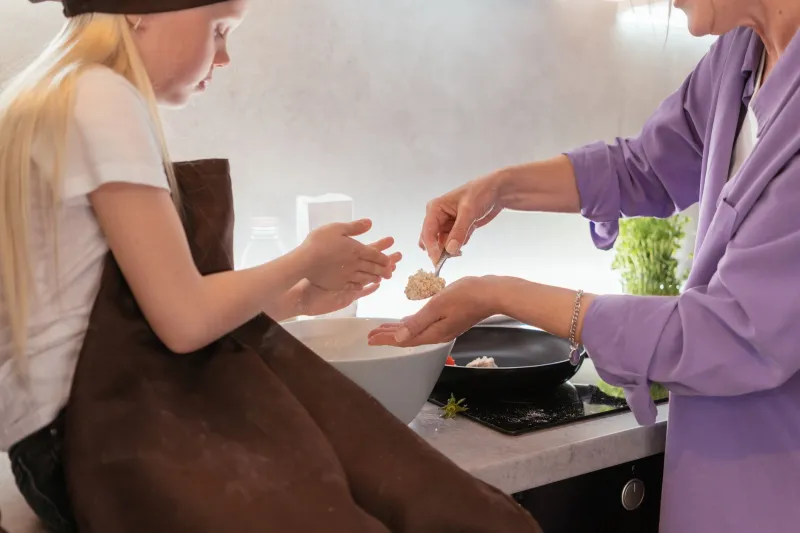
There's a video making the rounds on TikTok. A woman in her mid-seventies, headscarf slightly askew, is standing in a kitchen somewhere in New Jersey. She's kneading dough with the kind of focused intensity usually reserved for surgical procedures. Her granddaughter is filming. The grandmother — who the caption identifies only as "Teta Fatma" — is also, somehow, simultaneously delivering a seven-minute lecture on why you should never lend money to someone who hasn't learned to be hungry.
The video has 2.3 million views. The comments are full of 22-year-olds calling it the most useful financial advice they've ever received.
This is not a fluke.
The Algorithm Didn't Plan This — Real Life Did
For the past couple of years, a specific kind of creator has been quietly accumulating massive, devoted followings on TikTok and Instagram Reels. They're not offering morning routines. They're not selling supplements. They're Turkish grandmothers, Lebanese aunties, Egyptian matriarchs, and Palestinian mothers-in-law — and they are delivering life coaching content that no amount of venture capital could manufacture.
The format varies. Sometimes it's a granddaughter translating in real time while Büyüanne (the Turkish word for grandmother, often shortened to "Büyü Ebe" in certain regional dialects) talks about how she rebuilt her life after immigrating with nothing but two suitcases and a recipe for lentil soup. Sometimes it's a "day in the life" video that turns into a full-on philosophy session by the time the onions hit the pan. Sometimes it's just a woman in her sixties staring directly into the camera and saying something so blunt about relationships that the comment section short-circuits.
The authenticity isn't performed. That's the whole point.
What They're Actually Teaching
Break down the content and you'll find it covers a surprisingly wide range of what we'd formally call "life skills." Financial literacy is huge — these are women who lived through economic instability, currency crises in Turkey, displacement in Lebanon or Syria, or the grinding uncertainty of early immigrant life in America. When a Teta tells you to keep three months of cash somewhere your husband doesn't know about, she's not being dramatic. She's passing down survival knowledge.
Relationship advice is another pillar. And it's not the soft, boundaried, "communicate your needs" language of contemporary therapy-speak. It's direct, sometimes uncomfortably so, and often very funny. "He doesn't call his mother? He won't call you either. Next." That kind of thing. Gen Z, drowning in curated advice from people who have never actually struggled, finds this refreshing to the point of catharsis.
Then there's the practical stuff — cooking techniques, home remedies, cleaning hacks, how to negotiate at a market, how to read a person's character from the way they eat. Small wisdoms that don't have a formal name but collectively amount to something like emotional intelligence passed down through generations of women who had to be very, very observant to survive.
Why Now? Why Gen Z?
It's worth asking why this particular moment produced this particular phenomenon. Part of the answer is structural: TikTok's algorithm rewards retention and emotional response over follower count, which means a grandmother saying something genuinely wise can outperform a professional influencer saying something optimized. The playing field got leveled, and it turned out the grandmothers were holding better cards.
But the deeper answer has to do with exhaustion. Gen Z grew up watching a generation of influencers monetize every aspect of their lives, recommend products they don't use, and package vulnerability into content calendars. The result is a cohort that has developed extremely sensitive authenticity detectors. They can smell a sponsored moment from three videos away.
Teta Fatma kneading dough in New Jersey doesn't have a brand deal. She's not building a funnel. She's just telling you what she knows because her granddaughter pointed a phone at her. That's the entire appeal.
"There's something my followers tell me constantly," says one second-generation Turkish-American woman in Chicago who posts videos with her mother, a retired seamstress from Bursa. "They say it feels like calling a grandmother they never had. A lot of them grew up far from their own extended families. They're looking for that voice."
The Diaspora Dimension
For Turkish and Arab American families specifically, this trend carries an extra layer of meaning. Many second and third-generation kids grew up code-switching — American at school, something else entirely at home. The grandmother, the Teta, the Büyüanne, was often the keeper of the "something else." She was the person who held the old language, the old recipes, the old ways of understanding the world.
Posting her online doesn't dilute that. If anything, it validates it. It says: this knowledge is worth sharing. It says: the way she sees the world is valuable, not just quaint.
And for non-Turkish, non-Arab viewers — who make up a significant portion of these videos' audiences — it offers something else entirely: a window into a worldview that is communal, intergenerational, and deeply practical in ways that Western individualist self-help culture often isn't.
Chaos as Content Strategy
One thing that makes this content genuinely compelling is that it doesn't try to be content. The grandmother gets distracted. She argues with someone off-camera. She stops mid-sentence to yell at a grandchild in the other room. She circles back to a point she made four minutes ago and contradicts herself slightly.
This is not a bug. Audiences who have been raised on heavily edited, perfectly paced creator content find the chaos almost meditative. It mirrors real life. It mirrors the experience of actually sitting in someone's kitchen and learning something slowly, the way knowledge was always meant to transfer.
The polished influencer economy built its entire model on the premise that people want perfection. Turns out, a lot of people just want someone who's been through something real to look them in the eye and tell them what they learned.
Teta Fatma figured that out without a media consultant. The algorithm caught up eventually.