From Grandma's Doorstep to a Global Empire: How the Nazar Became a Billion-Dollar Business
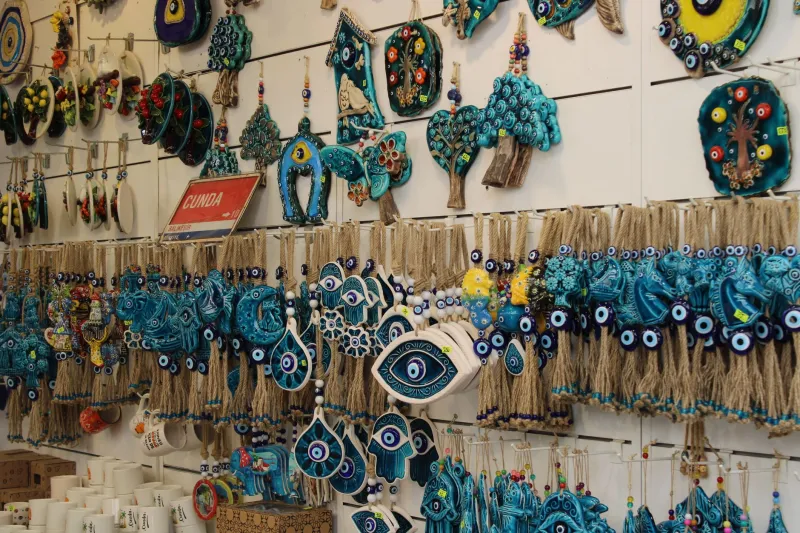
Walk into any Anthropologie, browse Etsy for ten minutes, or scroll through the wellness section of Urban Outfitters and you'll find it — that unmistakable concentric circle of cobalt blue, white, and black. The nazar. The evil eye. Call it what you want, but one thing is undeniable: it's everywhere, and somebody is making a lot of money off it.
The global evil eye market — encompassing jewelry, home décor, skincare branding, wellness apps, and spiritual accessories — was valued at over $1.2 billion in 2023, according to market research firm Grand View Research, with projections showing continued double-digit growth through 2030. And while big-box retailers and fast-fashion brands have been quick to slap the symbol on everything from phone cases to throw pillows, a quieter, more intentional story is unfolding in the background: Turkish and Arab-American entrepreneurs who actually grew up with this symbolism are building serious, sustainable businesses around it.
The Symbol Has Always Been Serious — Just Not in America
For millions of families across Turkey, Lebanon, Egypt, Jordan, and the broader Middle East, the nazar boncuğu isn't a trend. It's not aesthetic. It's protection. You hang it above a baby's crib. You pin it to a new outfit before a job interview. Your aunt slips one into your luggage before a flight. The belief — that certain people can transmit harm through envy, intentionally or not — is woven into daily life across cultures that span thousands of years.
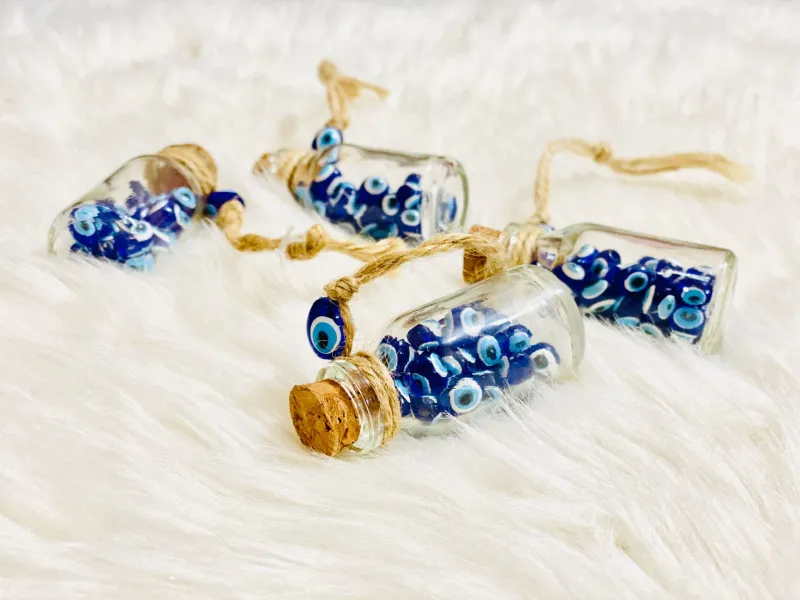
"My grandmother didn't buy the evil eye at a boutique," says Lara Şahin, founder of Göz Studio, a New York-based brand that sells hand-blown nazar beads sourced directly from artisans in Nazilli, Turkey. "She got hers from a specific woman in her village who made them. There was a whole ritual. It wasn't merchandise — it was medicine."
Şahin launched Göz Studio in 2020, initially just to sell to friends and family who were missing the tactile comfort of home during the pandemic. Within eight months, she had a six-figure Shopify store and a waitlist for her signature hand-blown pendant sets. Today, she works with twelve artisan families in western Turkey and employs four people in Brooklyn.
When Belief Becomes a Brand
Şahin isn't alone. Across the US, a generation of Turkish, Arab, and broader Middle Eastern diaspora founders are building brands that sit at the intersection of heritage and wellness — and they're doing it with a level of cultural specificity that mass-market competitors simply can't replicate.
Take Warda Khalil, a Jordanian-American who launched Ayn Collective out of Chicago in 2021. Her line of evil eye–adjacent wellness products — think facial mists infused with rosewater and blue lotus, packaged in deep blue glass bottles embossed with Arabic calligraphy — has landed in over 200 independent retailers across the US and Canada.
"I was tired of seeing the symbol stripped down to a sticker," Khalil says. "There's a whole philosophical framework behind the idea of protection, of warding off envy, of tending to your energy. I wanted to build products that honored that depth."
Khalil's bestseller, a protection mist called Ayn al-Hasad (literally, the eye of envy), sold out three times in its first year. Her customer base? About 60 percent non-Arab, non-Turkish Americans who discovered her brand through wellness influencers on TikTok.
TikTok Changed Everything
If there's one platform that turbocharged the nazar's crossover appeal, it's TikTok. The hashtag #evileye has accumulated over 4 billion views on the platform, with content ranging from styling videos and unboxing hauls to earnest explanations of what the symbol actually means in its original cultural context.
Diaspora creators have played a huge role in this shift. Unlike the sanitized, trend-chasing content that often dominates wellness spaces, Turkish and Arab TikTokers have been unapologetically specific — sharing family stories, explaining the difference between the nazar and the hamsa (a common point of confusion), and calling out brands that get it wrong.
"I did a video explaining that the hamsa is primarily a Jewish and North African symbol, and that a lot of people conflate it with the Turkish nazar, which comes from a completely different tradition," says Deniz Aydın, a Turkish-American creator based in Los Angeles with 340,000 followers. "It got 2 million views. People were genuinely curious. They want to understand what they're wearing."
That curiosity has created a unique opening for founders like Şahin and Khalil, who can speak to that depth authentically — and who've built brands that reward customers who want more than just a blue bead.
The Commercialization Question
Of course, not everyone is comfortable with how fast and how far the nazar has traveled from its origins. The billion-dollar market number sounds impressive, but critics — including some within the Turkish and Arab-American communities — point out that most of that money isn't flowing back to the cultures that created the symbol.
Fast-fashion retailers have been particularly criticized for mass-producing cheaply made evil eye products with no artisan connection, no cultural context, and no supply chain transparency. A $4 evil eye pendant at Forever 21 and a $140 hand-blown glass piece from an Izmir craftsman might look similar on a shelf, but they represent completely different economic realities.
"There's a difference between appreciation and extraction," says Dr. Nadia Yousef, a cultural anthropologist at NYU who studies Middle Eastern diaspora identity. "When a Turkish artisan family in Bodrum benefits from American interest in their craft, that's a beautiful exchange. When a fast-fashion company in China mass-produces a symbol for profit with zero cultural input, that's something else entirely."
For diaspora entrepreneurs, navigating this tension is part of the daily reality of running a business. Şahin is transparent about her supply chain on her website, listing each artisan family she works with and linking to their stories. Khalil donates 5 percent of her profits to a women's cooperative in Amman that supports female artisans.
"I can't control what Forever 21 does," Khalil says. "But I can control what my brand stands for. And I think customers — especially younger ones — are paying attention to that."
What's Next for the Nazar Economy
The next frontier, it seems, is digital. Several startups are exploring evil eye–inspired wellness apps, protection rituals as subscription content, and even NFT-based nazar art collections. Whether those ventures will land with authenticity or tip into gimmick territory remains to be seen.
What's clear is that the appetite for this kind of cultural wellness — rooted in something ancient, specific, and genuinely meaningful — isn't going away. If anything, it's growing as American consumers push back against the generic self-care industrial complex and look for traditions with actual history behind them.
For the diaspora founders who've been building in this space, that's both an opportunity and a responsibility.
"My grandmother would be horrified and delighted at the same time," Şahin laughs. "Horrified that her bead is on a celebrity's Instagram. Delighted that people in Brooklyn care about where it came from. I'm trying to honor both of those feelings every single day."
The evil eye has been watching over people for millennia. Now, it seems, the whole world is finally watching back.