No Auto-Tune Required: How Oud Players and Ney Masters Are Quietly Crashing the Grammys
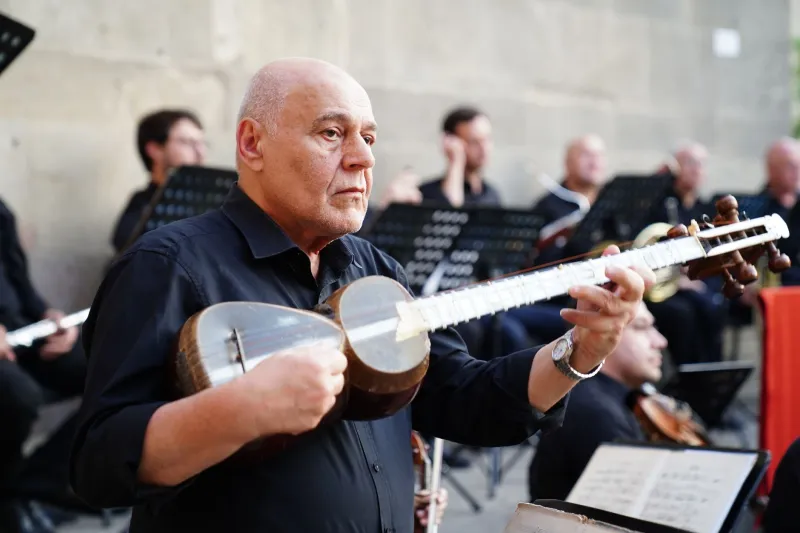
There's a moment in a Naseer Shamma performance — somewhere between the third and fourth maqam shift — when American audiences who've never heard an oud in their lives go completely still. Not politely quiet. Actually still. The kind of still that means something is happening inside them that they don't have a word for yet.
That moment? It's happening more and more often. And the music industry is finally paying attention.
The Sound That Refuses to Compromise
For decades, the conventional wisdom in the American music business was pretty straightforward: if you came from a non-Western tradition, you had two options. You could stay in your lane — niche festivals, specialty record stores, the 'world music' corner of whatever streaming platform would have you — or you could westernize. Smooth out the quarter-tones. Replace the ney with a flute. Swap the darbuka for a drum kit. Make it digestible.
A growing cohort of Turkish and Arabic musicians decided, loudly and collectively, that neither option was acceptable.
Artists like Mercan Dede, who layers Sufi ney improvisation over electronic beats without ever letting the reed instrument lose its breathy, human quality. Or Fairuz collaborators who have spent decades insisting that Arabic maqam — those complex modal scales that don't map neatly onto a Western piano — are not a problem to be solved but a feature to be celebrated. These musicians didn't soften their sound. They just got smarter about distribution.
How the Algorithm Became an Unexpected Ally
Here's the irony nobody predicted: the same platforms that flattened so much of pop music into an indistinguishable blur of four-chord progressions and 808 bass drops also quietly became the best thing that ever happened to traditional Turkish and Arabic music.
Spotify's recommendation engine doesn't care that you've never heard of a saz. If you lingered on a track for more than thirty seconds, it's going to serve you another one. TikTok's For You page has introduced more American teenagers to the sound of a kanun than any world music festival ever could — not because anyone planned it that way, but because the algorithm rewards the thing that makes people stop scrolling. And something about the resonance of a well-played oud, it turns out, makes people stop scrolling.
The numbers back this up. Streams of Turkish classical and Arabic traditional music on major platforms have climbed steadily over the past three years. Artists who were previously known almost exclusively within diaspora communities are now showing up in the playlists of people in Ohio and Oregon who couldn't point to Istanbul on a map.
Grammy Recognition and What It Actually Means
The Recording Academy has been slow — critics would say glacially slow — to catch up with what listeners are already doing. But the tide has been shifting. The World Music category, now rebranded as Best Global Music Album, has seen nominations and wins go to artists who made zero concessions to Western pop structure. Ravi Shankar set a precedent decades ago, but the current moment feels different: these artists aren't being celebrated as exotic curiosities. They're being recognized as technically rigorous musicians working in sophisticated traditions.
For Turkish and Arabic artists specifically, the conversation has moved beyond 'isn't this interesting' into something closer to genuine critical respect. When an album built around Ottoman makam scales gets reviewed seriously in American music publications — not in a travel section, not with a paragraph explaining what Turkey is — that's a shift.
It's worth noting what these musicians are actually working with. Maqam and makam systems — the Arabic and Turkish terms for essentially the same concept — contain dozens of distinct modal scales, many of which use intervals that fall between the notes on a standard Western keyboard. Learning to hear them, let alone play them, takes years. The ney, a reed flute central to Sufi music, requires a specific embouchure technique that players spend a decade developing. The oud has no frets, which means intonation is entirely in the hands of the player. These are not simple instruments being played simply. The Grammy recognition, when it comes, is recognizing genuine mastery.
The Collaboration Question
One of the more interesting dynamics in this space is how Turkish and Arabic artists are navigating collaboration with Western musicians — doing it on their own terms.
The old model of collaboration often meant a Western pop star 'featuring' a world musician, essentially borrowing a texture or an aesthetic without engaging with the underlying tradition. What's happening now looks different. Producers like Acid Arab have built entire careers on treating North African and Middle Eastern musical structures as the main event, not the seasoning. Turkish electronic artists are sampling classical Turkish radio broadcasts not to seem retro but because the source material is genuinely complex and interesting. When these collaborations work, it's because both parties are treating the non-Western tradition as the thing worth preserving, not the thing worth updating.
For the diaspora communities watching all of this unfold from cities like Chicago, Houston, and Dearborn, there's something quietly satisfying about it. The music their grandparents played on cassette tapes, the music that got turned down at house parties because 'guests might not get it' — that music is now the thing people are Shazam-ing at restaurants.
What American Audiences Are Actually Hearing
There's a learning curve, and it's real. American ears trained on Western tonal systems can find maqam-based music disorienting at first — not unpleasant, just unfamiliar in a way that takes some getting used to. What's interesting is that younger American listeners seem less bothered by this than previous generations. Growing up with global content on YouTube and TikTok has genuinely expanded what sounds 'normal' to a generation of kids who've been passively absorbing sounds from everywhere since they were twelve.
Music educators in the US are starting to notice this too. There's growing interest in incorporating non-Western modal theory into music curricula, partly because students are already arriving with exposure to these sounds and wanting to understand them better.
The Longer Game
None of this means the music industry has suddenly become enlightened. The 'world music' ghetto still exists. Radio play for oud-forward compositions remains essentially zero. The Grammy category, for all its progress, still occasionally gets criticized for lumping wildly different traditions together under a single umbrella.
But the direction of travel is clear. Turkish and Arabic musicians who refused to compromise their instruments, their tuning systems, or their compositional logic are winning. Not despite their refusal to westernize — because of it. Authenticity, it turns out, is not a liability in the streaming era. It's the whole point.
The ney is still breathing. The oud is still fretless. And American audiences, one algorithm-served recommendation at a time, are learning to love both.