Beyond Bollywood: How Turkish Dramas and Arabic Series Became America's New Streaming Obsession
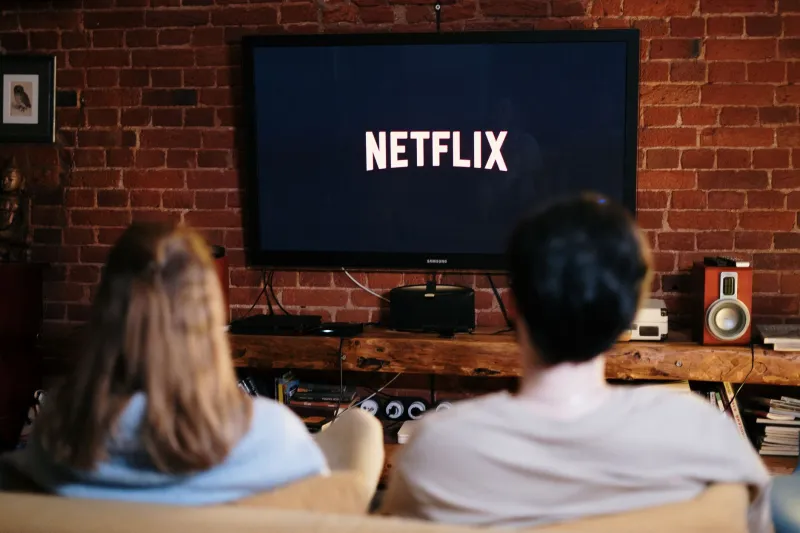
Somewhere between a slow Tuesday night and a spontaneous Netflix scroll, Danielle Morales, a 34-year-old school counselor from Austin, Texas, stumbled onto a Turkish historical epic. She expected to watch maybe one episode. She finished the entire first season in four days.
"I don't even speak Turkish," she laughed over the phone. "But I was completely locked in. The costumes, the betrayals, the way every episode ends on an impossible cliffhanger — I forgot I was reading subtitles after the first twenty minutes."
Danielle isn't alone. Across the US, a quietly massive shift has been happening in how Americans consume foreign-language content — and Turkish dramas (known as dizi) along with Arabic series are sitting right at the center of it.
From Niche to Mainstream — Slowly, Then All at Once
For years, Turkish and Arabic content existed in a particular lane: immigrant households, diaspora communities, dedicated fans who knew exactly where to look. Platforms like Tubi, MBC's streaming arm, and smaller specialty services carried the bulk of it. Then Netflix started paying attention.
The addition of shows like Diriliş: Ertuğrul — already a global phenomenon after Pakistan's government broadcast it on national TV — gave American audiences a formal introduction to the scope of Turkish production. The show, which dramatizes the origins of the Ottoman Empire, runs to hundreds of episodes and has a production budget that rivals many American cable dramas. Netflix later added Fatih Harbiye, Kara Para Aşk, and several others, quietly building out a Turkish content library that now stretches across genres.
Arabic content followed a parallel track. Paranormal, an Egyptian supernatural thriller co-produced with Netflix, became one of the platform's first major Arabic-language originals. It landed on Netflix's global top ten in multiple countries and introduced American viewers to a storytelling tradition that blends folklore, political history, and noir thriller energy in ways that felt genuinely fresh.
"The algorithm doesn't know your ethnicity," said one streaming industry analyst who consults for several major platforms. "It knows your behavior. And once enough American viewers started finishing these shows — actually finishing them, not dropping off after episode two — the recommendation engine started surfacing them more broadly."
What's Actually Hooking American Viewers
Ask American fans what draws them in and a few themes come up again and again: family loyalty pushed to its absolute limits, romantic tension that actually builds slowly instead of resolving in twenty minutes, and political intrigue that doesn't feel like it was written for a civics class.
Jared Kim, a 28-year-old graphic designer in Brooklyn, got into Turkish dramas through a Reddit thread about shows with "real stakes." He started with Çukur, a crime drama about a family running a neighborhood in Istanbul, and hasn't really stopped since.
"American shows about crime and family — they're great, don't get me wrong — but they often feel like they're performing emotion," he said. "Turkish dramas go somewhere uglier and more honest with it. You understand why every character does what they do, even when it's terrible."
This emotional legibility is something producers are actively thinking about. Farida Haidari, a producer who has worked on co-productions between US and Middle Eastern streaming platforms, says the key is understanding which elements are universal and which need framing.
"Family honor, betrayal, the tension between tradition and personal desire — these are not foreign concepts to American audiences," she explained. "What sometimes needs translation is context. Why does this character feel they can't leave their family's business? What does it mean in this society to defy your father? Once viewers understand the stakes, they're completely invested."
The Subtitle Barrier Is Getting Smaller
Five years ago, convincing a mainstream American audience to watch subtitled content was an uphill battle. Then Squid Game happened, and the conversation changed overnight. Suddenly, subtitles weren't a dealbreaker — they were almost a marker of quality, a signal that you were watching something that didn't need to dumb itself down for export.
That cultural shift has benefited Turkish and Arabic content directly. Platforms have also gotten significantly better at subtitle quality, moving away from the clunky machine translations that used to flatten dialogue into something barely functional.
"The old subtitles for some of these shows were genuinely painful," said Morales, the Austin counselor. "Now they actually capture the rhythm of how people talk. You can feel the sarcasm, the affection. That matters more than people realize."
Dubbing remains a contested topic in fan communities. Some American viewers prefer it; purists argue it strips away too much. Most platforms now offer both options, letting audiences self-select — and data suggests that dubbed versions are pulling in a separate, often older demographic that might never have engaged with the content otherwise.
The Discord and TikTok Effect
No conversation about this streaming boom is complete without acknowledging how social media is accelerating it. Turkish drama fan accounts on TikTok regularly rack up millions of views with clip compilations, reaction videos, and deep-dive analyses of plot arcs. Hashtags like #TurkishDrama and #DiziFan have become genuine communities, not just content buckets.
Discord servers dedicated to specific shows function like book clubs — members watch together, argue about character motivations, and share cultural context that helps non-Turkish or non-Arab viewers understand references they might otherwise miss. It's a kind of crowd-sourced cultural translation, and it's making these shows stickier than any algorithm could on its own.
"I learned more about Istanbul's geography from a Discord server than from anything else," laughed Kim. "Someone made a whole map of where scenes in Çukur were actually filmed. That's the level of investment people have."
What Comes Next
The momentum feels real, but it also raises genuine questions about what happens when international content gets too aggressively optimized for global markets. There's already a debate within Turkish and Arab creative communities about whether chasing international streaming deals means softening edges, cutting storylines that might read as too culturally specific, or pacing episodes to match Western attention spans.
Haidari is cautiously optimistic. "The best version of this is when a show is so deeply rooted in its own world that it becomes universally compelling because of that specificity, not in spite of it," she said. "The worst version is when everything gets sanded down into something that could have been made anywhere. Audiences can feel the difference."
For Danielle Morales, the question is simpler. She just finished her third Turkish series and is eyeing an Egyptian thriller her coworker recommended.
"I used to think I needed to watch something I already understood," she said. "Now I think that's exactly what was boring me."
The New Silk Road runs through your streaming queue now. Might be worth seeing where it goes.