Biryani Economics: The Friday-Night Dinner That Quietly Funds a Whole Community
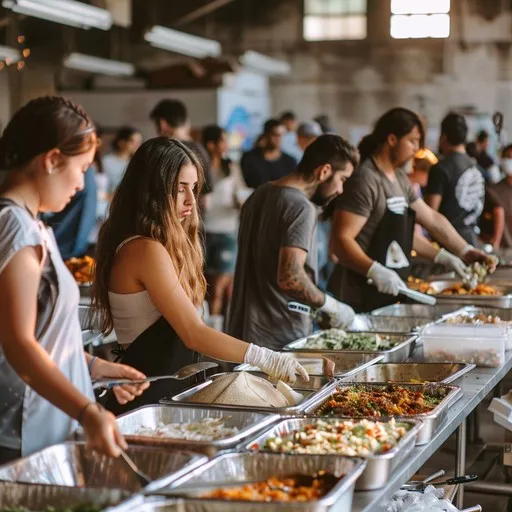
Photo: large communal dinner buffet trays rice community gathering hall volunteers serving food, via images.stockcake.com
The trays come out at 7:40 p.m. sharp, and they are enormous.
Steel pans of biryani, each one big enough to bathe a toddler, carried shoulder-high through a basement multipurpose room where three hundred people are already seated in tight rows. There's salad in volumes that suggest a commercial farming operation. There's a dessert table staffed by volunteers who have been baking since Fajr. There is, somewhere in the back, a folding table with a cash box and a microphone that has seen better decades.
Welcome to the Friday-night fundraiser dinner — arguably the most effective, least understood community institution in America.
The Menu Is the Message
Let's start with the food, because everything else depends on it.
The menu rotates by community and by season: Turkish centers might do etli pilav and mercimek çorbasi in winter, kebabs in Ramadan. Arab American centers lean into maqluba, kabsa, and the eternal biryani, which has somehow become the unofficial national dish of the American mosque fundraiser regardless of anyone's actual heritage. Someone's mother is always convinced the rice ratio is wrong. Someone else's mother is always right.
The economics are where it gets beautiful. Almost nothing is bought at retail. Rice comes from a wholesale club in twenty-five-pound bags. The meat is purchased in bulk from a halal butcher who, more often than not, discounts it because his kids went to the school the dinner funds. The labor is entirely volunteer, mostly women, mostly organized by a WhatsApp group whose admin powers are treated with quiet reverence.
A dinner that might cost $12 a plate at a restaurant is produced here for maybe $3 a head — and every dollar over cost goes straight to the cause. Do the math on three hundred attendees at a $15 suggested donation and you start to understand why this machine never stops running.
The Auction: America's Most Underrated Spectator Sport
Then there's the auction, which deserves its own documentary.
Somewhere between the main course and dessert, the emcee — usually a board member with an unexpected flair for the dramatic — starts the bidding. A weekend retreat. A catered dinner. A donated piece of artwork or, in one legendary case, a car. The bidding is part generosity, part theater, part cold war between two uncles who have been one-upping each other since 1998.
The room plays along like it's a playoff game. Someone bids $500. The crowd claps. Someone else counters at $750 and a table in the back chants a first name. By the time the item closes, the auction has raised more than the tickets did, and the winner looks genuinely triumphant, holding up a framed calligraphy print like it's the Lombardi Trophy.
And here's the thing outsiders miss: nobody needs the item. Everyone understands the game. The bidding is a competitive sport of giving, and the prize is just the receipt.
Where the Money Actually Goes
The stereotype of the fundraiser dinner is a vague pot of money disappearing into a building fund. The reality, if you follow the spreadsheets, is far more grounded.
A single season of these dinners across a mid-sized community can fund: a food pantry that distributes groceries to hundreds of families a month, including plenty of non-Muslim neighbors; scholarships for first-generation college students; refugee resettlement costs — furniture, winter coats, apartment deposits; emergency relief wired overseas within days of a disaster, because the network is already organized and the cash box is already open; and yes, the roof, because the roof always needs something.
The efficiency comes from the structure itself. No venue rental — the community center is the venue. No catering contract — the aunties are the catering. No marketing budget — Friday prayers are the marketing. Overhead is a cash box, a projector, and whatever the rice cost at Costco.
Compare that to a gala with a $200-a-plate venue, a hired emcee, and an open bar, and the mosque basement starts to look like what it is: one of the leanest fundraising operations in the country.
The Real Product Is the Table
Ask the volunteers why they do it — after the fourth tray of rice, after the dishwasher has backed up twice — and the answer is never really about the money.
It's about the table. The kid who had his first taste of community responsibility hauling water pitchers. The widow who hasn't cooked for a crowd since her husband passed, now running the dessert station like a general. The convert who came for dinner and found a family. The neighbor from down the block, not Muslim, who shows up every month because "the food's good and the people are better," and who now chairs the interfaith committee.
In an era when Americans report record loneliness and declining trust in institutions, this unglamorous Friday ritual solves both problems in the same evening. You eat. You bid. You argue about the rice. You go home full, a little lighter in the wallet, and significantly less alone.
The trays come out at 7:40. The cash box fills by 9:30. Somewhere between those two times, a community funds its whole year — and nobody outside the basement ever hears about it.
Maybe that's the point. The best institutions in America don't advertise. They just keep the rice coming.